
The Pitstop Journal
RSS-
Most 2-post lifts run on 220V single-phase power, and almost none will run on a household 110V circuit. You need a dedicated 30-amp double-pole breaker and 10-gauge wire, stepping up to 8-gauge on runs past 50 feet. This guide covers voltage, phase, breaker size, wire gauge, plug versus hardwire, and what an electrician actually costs. Real specs from the Katool KT-H105, AMGO BP-9, and Tuxedo TP9KAC. Read now!Read now -
How Much Ceiling Height Do You Need for a 2-Post Lift?
Read nowHow much ceiling height you need for a 2-post lift depends on the lift design, not just how high it rises. Overhead models want about 11 to 12 feet because of the crossbar at the top, while baseplate lifts can fit garages closer to 9 to 10 feet. This guide breaks down the exact math, gives a minimum ceiling height by vehicle type, and covers your options when the ceiling comes up short. It also flags the garage door and opener hardware that quietly steal the clearance you thought you had.
-
2-Post Lift Concrete Requirements: Thickness, PSI, Specs
Read nowBottom line: 4 inches of 3,000 PSI concrete, cured 28 days, with no cracks or post-tension cables in the anchor footprint is the typical minimum for a 10,000 lb 2-post lift. Heavier capacities push that to 4.25 or 4.75 inches. This guide walks through the four numbers that actually matter, how to check your existing slab, ranked fixes when the spec falls short, and the anchor-torque step nobody talks about loudly enough.
-
How to Install a 2-Post Car Lift: Step-by-Step Guide
Read nowBottom line: a 2-post lift installs in one to two working days if your slab, ceiling, and 220V power are already in place. The sequence is uncrate, position the columns, verify slab and plumb, drill and torque anchors to spec, connect hydraulics and overhead shutoff, then run a no-load cycle before any vehicle goes on it. Skipping the no-load cycle or under-torquing the anchors are the two failure modes that turn a clean install into a callback. Full step sequence, tool list, torque values, and what to test before you trust the lift with a real vehicle.
-
Are NitroFill Nitrogen Generators Worth It? Honest Review
Read nowAre NitroFill nitrogen generators worth the $2,900 to $13,500 sticker price, or is it a sticker upsell? The honest answer depends on tire volume and how you size the unit. This guide walks where nitrogen actually helps, the ROI math by daily tire count, and which NitroFill model fits which shop profile. Three top picks (E-135, E-160, E-170H) round out the breakdown.
-
How to Start an Auto Shop: Equipment Checklist 2026
Read nowBottom line: opening a viable two-bay shop in 2026 takes roughly $25,000 to $55,000 in equipment if you buy smart, plus rent, deposits, insurance, and working capital. The single biggest line item is your lift bay, with everything else, tire stack, diagnostics, air, and alignment, scaling from there. This guide walks through the actual equipment list, three sample bay budgets, and the layout and compliance details that make or break a shop in year one.
-
How Much Does a Car Lift Cost? Buy and Install Pricing
Read nowA complete car lift purchase in 2026 runs $1,800 to $7,500 for the lift alone, plus another $400 to $2,000 in freight, install, and electrical work. The sticker price on a 2-post or 4-post lift is usually only 60 to 80 percent of what you actually pay to be wrenching by the weekend. This guide breaks down every line item, from lift price tiers to concrete pad checks to power hookups, with three full budgets for a home garage, a value shop, and a commercial bay. By the end you will know exactly what to set aside before you hit checkout.
-
High Lift Garage Door Conversion: When You Need It
Read nowA high lift garage door conversion is what lets a standard residential overhead door clear the cab of an SUV on a 2-post lift, or the roof of a sedan on a 4-post storage lift. The job swaps in taller vertical track, longer torsion springs, and (usually) a wall-mount jackshaft motor. Pricing typically runs $400 to $1,200 for parts plus labor if you do not DIY. This guide walks you through when the conversion is required, how the mechanism works, what it costs, and how to avoid the common installation mistakes that ruin door balance.
-
Are Car Lifts Safe? Honest Answer to Common Safety Concerns
Yes, modern car lifts are safe when properly installed, maintained, and operated. The lift hardware itself is rarely the failure point. Slab spec, lock-engagement habit, arm pad placement, and annual inspection are. We cover real failure modes versus online fears, the modern safety stack, ALI versus CE certification in plain English, hard no's for installation, and three picks across price tiers. Read now!Read now -
How to Safely Move or Relocate Your Car Lift (Disassembly & Reinstallation Tips)
Read nowMoving a car lift is a long weekend with two people, the right tools, and a destination slab that actually checks out. Skip the slab and ceiling test and you turn a Saturday job into a $1,200 concrete cut. This guide walks through how to move a car lift end to end: decide-or-sell math, 2-post and 4-post disassembly order, transport, and reinstall. Read now!
-
Are AMGO Lifts Worth It? Honest Review of Quality, Safety & Best Models
Read nowAMGO lifts hit a real sweet spot for home garages: solid build for the price, U.S. parts inventory, and ALI-certified options on the pro side. Our honest review covers quality, manufacturing, warranty, and the three AMGO models we recommend most. We also flag where you should look elsewhere if your garage has a specific need AMGO can't meet, plus a head-to-head against Atlas and BendPak so you can place AMGO in the right tier.
-
Emergency Lowering: How to Safely Lower a Car Lift During Power Outage or Failure
Read nowLost power with a car on the lift? Almost every modern automotive lift is designed to be lowered safely without electricity, usually in under five minutes, using the lift's mechanical safety locks and the manual hydraulic release valve. This guide walks the procedure for both two-post and four-post lifts, the 60-second safety check you run first, and the red flags that mean stop and call instead of crack the valve. We also cover what to do when the lift won't lower at all, and the three Pitstop Pro picks built around clean, well-documented manual descent procedures.
-
Bridge Jack vs Bottle Jack on a 4-Post: The Safe Way to Lift Wheels
Read nowGetting your wheels off a four post lift safely is all about using the right tools and routine. This guide compares rolling bridge jacks and bottle jacks on a jack tray in plain language, so you can see which setup fits your budget, how often you wrench, and the vehicles you service. You will get a pros and cons breakdown, non negotiable safety rules, a quick sizing checklist, and a step by step wheels free workflow that keeps your 4 post lift stable, predictable, and easy to use.
-
Are TOPDON Diagnostic Tools Worth It? Honest Reviews, Use Cases, and Best Models
Read nowWondering if TOPDON diagnostic tools are actually worth the money or just another tablet on the cart? In this guide, we take an honest look at TOPDON scanners from a working shop and serious DIY point of view. You will see where TOPDON scan tools shine, where they fall short compared to dealer gear, and which models make the most sense for home users vs busy bays. We will break down real use cases, pricing and feature tradeoffs, and highlight the best TOPDON scanners to consider, including TopScan and the Phoenix series.
-
-
What Size Lift Do You Need? A Straightforward Capacity & Height Guide
Read nowChoosing the right size car lift starts with two numbers: how much your vehicles weigh and how high you can safely raise them in your garage. In this guide, you will learn how to measure vehicles and ceiling height, match those numbers to 2 post and 4 post lift specs, and avoid common pitfalls with door tracks, concrete, and power. We even include a simple checklist so you can size your next lift with confidence instead of guessing.
-
2-Post vs 4-Post vs Scissor Lifts: Which Is Right for Your Garage?
Read nowTrying to decide between a 2 post vs 4 post vs scissor lift for your garage can feel confusing fast. This guide walks you through how each lift actually works in the real world, from repairs and storage to low ceiling and rental spaces. You will see which style fits your vehicles, concrete, power, and budget so you can buy once and lift with confidence.
-
Must-Have Accessories for Your Car Lift (Jack Trays, Oil Drains, and More)
Read nowCar lift accessories can make every job in your garage safer, faster, and easier. This guide breaks down the must have add ons for 2 post and 4 post lifts, how to size them correctly, and which pieces to buy first so your setup runs smoothly and drama free from day one.
-
Best Car Lifts for Low Ceilings: Short-Height Models for 8–10 Ft Garages
Read nowInstalling a low ceiling car lift in an 8 to 10 foot garage is absolutely possible if you match the lift style to your space instead of the catalog numbers. This guide walks you through measuring real usable height, comparing baseplate 2 post and compact 4 post designs, and using smart accessories so you can lift safely without hitting door tracks, openers, or lights.
-
Best Portable Car Lifts for Home Mechanics (When You Can’t Install a Full Lift)
Read nowPortable car lifts let home mechanics get real under car access when a permanent lift is not possible due to space or rental rules. This guide walks through the main portable lift types, from two post and single post designs to scissor and caster ready 4 post models, and what they need from your floor and power. You will see which option fits your garage or driveway and how to use it safely without giving up valuable space.
-
Best 2-Post Car Lifts for Home Garages and Shops in 2026
Read nowLooking for the best 2-post car lift for 2026? Two-post lifts are the go-to choice for serious wheels-off service like brakes, suspension, and drivetrain work. In this guide, we cover key fitment considerations and highlight handpicked 2-post lift options for both home garages and busy commercial shops, plus accessories that improve safety and versatility.
-
Best 4-Post Car Lifts for Home Garages and Shops in 2026
Read nowFinding the best 4-post car lift for 2026 can completely change how you use your garage or shop, from adding stacked parking to making routine service more convenient. Four-post lifts excel at vehicle storage and light maintenance, and with the right accessories, they can handle wheels-off work as well. In this guide, we break down key fitment considerations and highlight handpicked 4-post lift options for both home garages and professional shop environments.
-
Is Pitstop Pro a Scam? Here’s the Truth
Read nowWorried after searching “Is Pitstop Pro a scam”? You’re not alone. This guide explains exactly what Pitstop Pro does, how freight delivery works for high-ticket shop equipment, and how to independently verify we’re a legitimate U.S.-based business operated by Ecom Pros LLC in Georgia. You’ll also find clear links to our reviews, policies, and direct support contact info so you can buy with confidence.
-
Katool vs Triumph: Budget Lift Brands Head to Head
Read nowChoosing between Katool and Triumph car lifts comes down to budget, capacity, and how you use your garage. This comparison breaks down safety, features, installation needs, and real world value so you can see what you gain or give up with each brand. By the end, you will know which lift is the better fit for your vehicles, slab, and workload.
-
Can You Leave a Car on a Two-Post Lift Long-Term? (Storage Safety Explained)
Read nowCan you leave a car on a two post lift long term? Short term parking on the locks can be done safely with strict procedure, but true long term storage is much better on a four post lift that supports the vehicle by the tires. This guide walks through the risks of two post parking, a safety checklist if you must store short term, and why four post lifts are the lower stress choice for long term vehicle storage.
-
When One Lift Isn’t Enough: How Adding a Second Lift Can Boost Shop Productivity
Read nowAdding a second car lift is one of the fastest ways to reduce bottlenecks, speed up repair times, and boost shop productivity without expanding your building. When one lift is doing every job, techs end up waiting, re-setting vehicles, and juggling misfit tickets that slow the entire day. A smart two-lift setup lets you divide work by type, match each job to the right equipment, and keep cars moving instead of stacking up. This guide breaks down the signals that show you are ready to add a second lift, simple throughput math, bay mix strategy, installation requirements, and safety considerations so you can upgrade your workflow with confidence.
-
Garage Pit vs Car Lift: Which Setup Is Safer and More Efficient for Auto Shops?
Read nowChoosing between a garage pit and a car lift comes down to safety, speed, ergonomics, and long-term ROI. Pits can work for quick-lube lanes and low ceilings, but they bring daily fall hazards, ventilation demands, and limited versatility. Modern ALI certified car lifts provide safer workflows, faster bay turns, wheels off capability, and easier compliance across mixed repair work. This guide covers safety, efficiency, ergonomics, installation requirements, operating costs, and key decision factors so you can determine the best fit for your shop. In most cases, lifts are the safer, faster, and more versatile choice for professional facilities.
-
How Long Does a Car Lift Last? Lifespan, Upkeep, and When to Retire It
Read nowWondering how long a car lift will last? The answer depends on usage, maintenance, and proper installation. With regular care, many lifts safely serve 15–20+ years, while neglect can cut life short. This guide covers lifespan factors, maintenance routines, warning signs, and the best replacement options to keep your shop running safely.
-
What Is CE Certification for Lifts—and Does It Matter in the U.S.?
Read nowSeen a car lift with a CE mark and wondered if it’s legit—or even legal in the U.S.? You’re not the only one. Many shoppers assume CE certification is the same as ALI, but the two follow very different rules. In this guide, we break down what CE certification actually means, how it stacks up against ALI’s gold label, and when a CE-marked lift can be a smart, budget-friendly option. If you're torn between saving money and staying code-compliant, this article gives you the clarity to choose the right lift with confidence.
-
Installing Lifts on Less-Than-Ideal Floors (Uneven, Thin, or Post-Tension Slabs)
Read nowInstalling a car lift on an imperfect garage floor can feel intimidating, but solutions exist for uneven, thin, or post-tensioned slabs. The key is knowing manufacturer concrete requirements and addressing safety risks before drilling or anchoring. From professional leveling to reinforced pads and no-drill lift options, there are safe ways to work around less-than-ideal floors. With the right planning, you can enjoy reliable lift performance without compromising safety.
-
Car Lift ROI: How a Lift Pays for Itself in a Home Garage or Shop
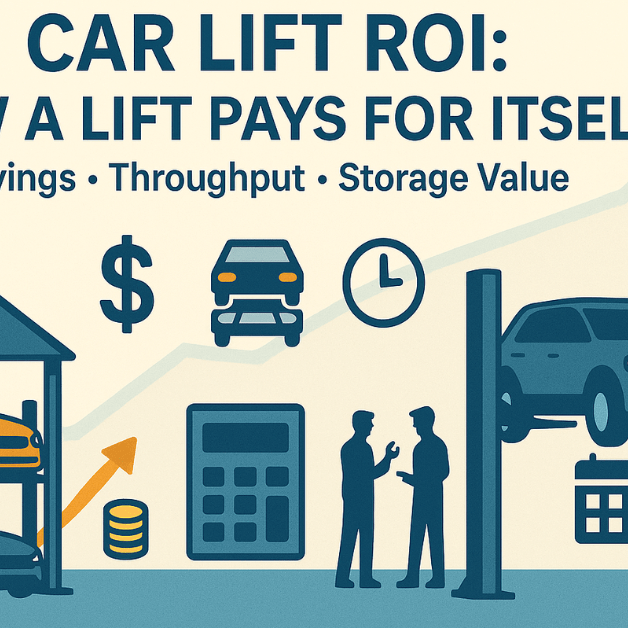
Read nowCar lift ROI measures how quickly a lift pays for itself through savings and earnings. For homeowners, that means avoiding labor costs, boosting vehicle life, and adding storage space. For shops, it means higher throughput, more billable jobs, and faster payback—sometimes in months. With the right model and setup, a lift becomes a cost-saving, revenue-generating asset for years.
-
Used Car Lifts vs New: Are the Savings Worth the Risk?
Read nowChoosing between a used or new car lift comes down to cost, safety, and long-term reliability. Used lifts can be bargains but carry risks like hidden wear, missing parts, and no warranty. New lifts demand higher upfront investment but deliver peace of mind with full safety features, predictable performance, and dealer support. By weighing true total cost of ownership, uptime needs, and safety requirements, you can make the smart call for your shop.
-
Can You Install a Car Lift Outdoors? Weather Considerations & Tips
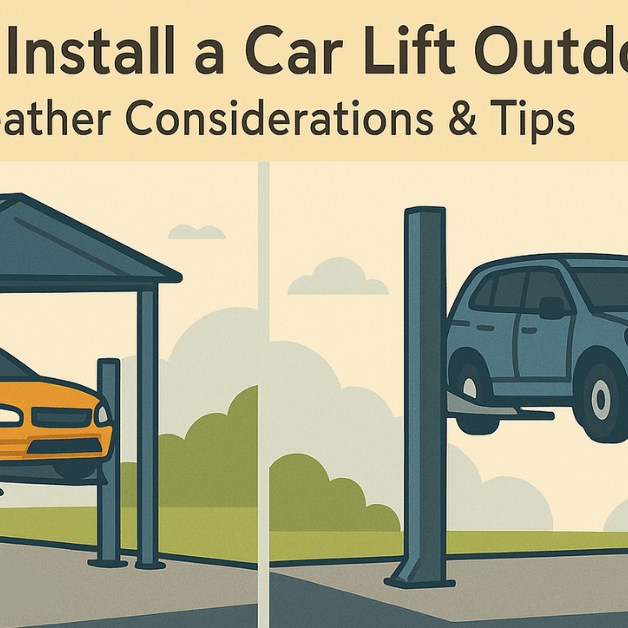
Read nowYes, you can install a car lift outdoors—but it takes extra planning and care. Weather exposure, slab prep, and tighter maintenance schedules all factor into safety. The right lift type, protective finishes, and a solid cover make open-air installs both practical and long-lasting. With the right approach, an outdoor lift can expand storage, add workspace, and safely serve for years.
-
Troubleshooting Common Lift Problems: Hydraulic, Electrical & Structural
Read nowEven the best car lifts need regular maintenance to stay safe and reliable. Hydraulic leaks, electrical faults, or structural wear can sneak up fast if you’re not paying attention. This guide covers the most common auto lift problems, how to troubleshoot them, and when to call a pro. With a few simple habits, you can keep your lift running smoothly and avoid costly downtime.
-
How to Maintain Your Car Lift: Daily, Monthly & Yearly Checklist
Read nowA consistent car lift maintenance routine keeps your shop safe and your lift reliable. Daily inspections, monthly service, and a yearly certified check prevent failures and protect warranties. From spotting leaks and testing locks to re-torquing anchors and replacing fluids, simple steps make a big difference. With the right checklist, you’ll extend your lift’s life, reduce downtime, and work with confidence every day.
-
Jack Stands vs. Car Lift: Why Upgrading to a Lift Is Worth It
Read nowThe debate between jack stands and car lifts centers on safety, speed, and capability. Jack stands are inexpensive and portable, but they leave room for error and can be slow and awkward to set up. A quality car lift offers built-in safety locks, full undercar access, and faster workflow for both DIYers and shops. For anyone who wrenches regularly, a lift is the smarter long-term investment.
-
Imported vs. USA-Made Lifts: Quality Differences & What Really Matters
Read nowMany buyers wrestle with the choice between imported and USA-made car lifts. While American brands like Rotary and Challenger carry prestige, quality imports from AMGO, Tuxedo, Atlas, and Triumph often deliver equal safety and performance for far less money. ALI certification, warranty support, and build quality matter more than the flag on the logo. By focusing on fundamentals, you can choose the lift that truly fits your garage or shop needs.
-
Do I Need to Bolt Down My 4-Post Lift? (Securing Lifts for Safety)
Read nowWondering if a 4-post car lift must be bolted down? This guide explains exactly when anchoring is recommended, when a freestanding setup is safe, and how slab quality, load, and usage affect the call. You’ll get clear safety steps—locks, shimming, chocks—and advice on caster kits and mobility. Read on for bolt/no-bolt examples and our top 4-post picks for home and light-duty shops.
-
AMGO vs BendPak: Which Professional Lift Brand Delivers More Value?
Read nowChoosing a professional car lift often comes down to AMGO vs BendPak. BendPak brings tank-like builds, deep U.S. support, and broad ALI certification for inspector peace of mind. AMGO delivers 90–95% of that capability for less, with modern features and a longer hydraulic warranty. Pick AMGO for maximum value in home/light-shop use; choose BendPak when nonstop uptime, ALI labels, and resale matter most.
-
Bridge Jacks 101: How They Work, Why They Matter, and What to Look For
Read nowA bridge jack turns your four-post lift from simple storage into a full-service tool. By raising one end—or both with two jacks—it gives you safe, wheels-off access for brakes, tires, and suspension work. In this guide, we’ll explain how bridge jacks work, key safety practices, and what to look for when buying one. You’ll also see our top bridge jack picks to help you upgrade your lift with confidence.
-
Best 2-Post Auto Lifts of 2025: Smart Picks for Home Garages and Pro Shops
Read nowLooking for the best 2-post car lift in 2025? This guide explains everything you need to know, from ceiling height and concrete requirements to power supply and safety standards. We also break down the pros and cons of 2-post lifts and highlight top models for both home garages and professional shops. Whether you’re a DIYer or a shop owner, you’ll be able to choose a lift with confidence.
-
Understanding Car Lift Weight Ratings (And Why Overloading Is Dangerous)
Read nowCar lift weight ratings aren’t just numbers—they’re critical safety limits that protect both your vehicle and your shop. Exceeding them, even slightly, can lead to equipment failure, vehicle damage, or serious injury. In this guide, we’ll explain how ratings are determined, the risks of overloading, and how to match the right lift capacity to your needs. With the right knowledge, you’ll be able to choose a lift confidently and use it safely every time.
-
Top Vehicle Lift Safety Mistakes (and How to Avoid Them)
Read nowEvery time you use a car lift, you’re raising thousands of pounds overhead—so safety isn’t optional. From ignoring weight limits to skipping daily inspections, small mistakes can create serious risks. This guide breaks down the most common car lift safety mistakes and shows you how to avoid them for safer, smarter lifting. Protect your equipment, your vehicles, and yourself by making safety a daily habit.
-
Lift Installation Requirements: Concrete, Electricity, and Garage Layout Tips
Read nowThinking about adding a car lift to your garage? Before you buy, make sure your concrete, power supply, and ceiling height are up to spec. In this guide, we cover the must-know installation requirements for 2-post and 4-post lifts so your setup is safe, smooth, and hassle-free. This way, you’ll avoid costly mistakes and install your lift with confidence.
-
Best 4-Post Vehicle Storage Lifts of 2025: Space-Saving, Secure, and Budget-Friendly
Read nowShort on garage or shop space? A 4-post vehicle storage lift lets you stack one car over another and instantly double parking—no remodel required. In this guide, we explain how these lifts work, what to measure before you buy (ceiling height, footprint, capacity, certification like ALI vs CE), how they compare to other options, and our best 4-post picks for 2025—make more room, lift with confidence, and stay on budget—explained simply.
-
What Is ALI Certification—and Does Your Car Lift Really Need It?
Read nowSeen the ALI gold label on a car lift and wondering if it’s worth it—or required? You’re not alone. With inspectors, insurers, and code enforcers favoring ALI-certified models, it’s easy to think they’re the only safe option. But is that really true? In this guide, we break down what ALI certification actually guarantees, who needs it (and who doesn’t), and how it compares to CE-marked lifts. Whether you’re running a commercial shop or just wrenching at home, this deep dive helps you make a smart, code-conscious lift decision.
-
Floor Plate vs Clear Floor Lifts: What’s the Real Difference?
Read nowTrying to pick between a floor plate and clear floor 2-post lift? 🔩 This guide breaks down how each design works, the pros and cons of both styles, and which one fits your ceiling height, workflow, and budget. Whether you're upgrading a home garage or outfitting a pro shop, we'll help you find the lift that keeps your tools—and your vehicles—moving smoothly.
-
ALI vs CE Certification: What’s the Difference—and Which One Should You Trust?
Read nowNot sure whether to trust ALI or CE certification when buying a car lift? You’re not the only one. ALI is North America’s gold standard backed by third-party lab tests, while CE marks are self-declared for the European market. In this guide, we’ll break down how each system works, what the labels actually guarantee, and which one fits your garage, budget, and compliance needs—no fluff, just facts.
-
Symmetric vs Asymmetric Lifts: Which Setup Is Right for Your Bay?
Read nowShopping for a 2-post lift but torn between symmetric and asymmetric designs? 🛠️ This guide breaks down how each style works, which vehicles they’re best for, and the pros and cons of both setups. Whether you’re lifting work trucks, sports cars, or a mix of both, we’ll help you compare arm layouts, understand space requirements, and find the right lift for your garage—so you can wrench with confidence.
-
Are Tuxedo Lifts Worth It? Honest Review of Quality, Safety & Support
Read nowHeard of Tuxedo car lifts but not sure if they’re worth the money? You’re not alone. Built overseas but backed by a U.S.-based company with over 15 years in the industry, Tuxedo lifts offer solid performance, safety features, and nationwide parts support—often at hundreds less than big-name brands. In this guide, we break down real-world reliability, ALI certification options, and how Tuxedo stacks up to Atlas and BendPak. Whether you're shopping for a 2-post, 4-post, or space-saving lift, this article gives you the facts.
-
Are Atlas Lifts Worth It? Certification, Manufacturing & Full Breakdown
Read nowCurious about Atlas lifts but worried they’re made overseas and cutting corners on safety? You’re not alone. Atlas designs and quality-tests every model in the U.S., then contracts trusted factories abroad—some carry the ALI Gold Label, others skip certification to stay budget-friendly. In this guide, we’ll cut through the noise on build quality, ALI certification, and warranty support for their 2-post, 4-post, and scissor lifts—no fluff, just facts.
-
Are Triumph Lifts Worth It? (2-Post & 4-Post Lift Guide)
Read nowCurious about Triumph lifts but unsure if they’re legit? You’re not the only one. While they aren’t ALI-certified and are made overseas, Triumph lifts come from National Auto Tools—a Texas-based company that’s been backing mechanics and small shops for 20+ years. In this guide, we cut through the noise and break down Triumph’s real-world performance, warranty support, and what owners actually think. Whether you’re eyeing a 2-post, 4-post, or scissor lift, this article shows you what to expect—no fluff, just facts.
-
The Ultimate Wheel Alignment Machine Guide: Drive Straight, Save Tires, and Choose the Right System
Read nowTired of crooked steering, uneven tire wear, or customer complaints about pulling? A wheel alignment machine might be your shop’s best investment. In this hands-on guide, we’ll break down how alignment machines work, what to look for when buying one, and why 3-D systems are the new standard for speed and accuracy. Whether you're a weekend DIYer or running a full-service garage, this deep dive shows how the right aligner can boost safety, extend tire life, and keep every car tracking straight. 🎯🔧
-
Are Katool Car Lifts Worth It? A Closer Look at Quality, Safety, and Support
Read nowLooking at Katool lifts but wondering if they’re too good to be true? You’re not alone. With no ALI sticker and prices well below big-name brands, it’s fair to be cautious. But Katool—backed by U.S.-based Autokato Engineering—blends heavy steel, CE-certified safety, and real tech support at a price that’s hard to beat. In this guide, we break down how Katool lifts are built, how they perform in the real world, and what buyers are saying after install day. Whether you’re wrenching at home or running a busy bay, this deep dive helps you decide if Katool deserves a place in your garage.
-
The Ultimate Wheel Balancer Guide: Stop Vibration, Extend Tire Life, and Choose the Right Machine
Read nowTired of steering wheel shake or uneven tire wear? It might be time to invest in a wheel balancer. In this no-fluff guide, we’ll break down exactly how wheel balancing works, which machines are worth your money, and how to fix vibrations for good—whether you’re a DIYer working out of your garage or a full-time tech running a busy shop. From bubble balancers to road-force units, we cover the tools, tips, and top features that make every ride smoother and every tire last longer. ⚖️🚗
-
Tire Changer Guide: How to Choose, Use & Buy the Right Machine
Read nowIn this guide, you’ll learn exactly how tire changers work, why they’re worth the investment, and how to choose the right model based on your vehicle type, usage, and budget. We’ll walk you through the different types of machines, key features to look for, how to use one step by step, and how much you can expect to spend. Whether you're a DIYer or a pro, this guide gives you everything you need to make an informed purchase—and start changing tires like a pro.
-
Scissor Lift Guide: How to Choose, Use, and Maintain the Perfect Lift for Your Garage or Shop
Read nowLooking to upgrade your garage setup? 🚗 A scissor lift might be the space-saving, back-saving solution you’ve been dreaming of. In this ultimate guide, we break down everything from how scissor lifts work to choosing the right model for your needs—whether you’re a DIYer in a tight garage or a pro running a small shop. Compare lift types, explore top-rated models like Katool and Atlas, and get expert tips on setup, safety, and maintenance so you can lift with confidence. 🔧✨
-
The Ultimate 4-Post Car Lift Guide: Setup, Maintenance & Safety Essentials
Read nowUnlock the full potential of your garage with a 4-post car lift. Our comprehensive guide dives into the benefits of upgrading from 2-post lifts and provides essential tips for installation, maintenance, and maximizing safety and efficiency. Whether you're a DIY enthusiast or a professional mechanic, you'll discover expert advice to optimize your workspace and make vehicle care effortless.
-
The Ultimate 2-Post Car Lift Guide: Expert Advice on Safety, Installation & More
A 2-post car lift gives you the cleanest undercar access of any home-garage lift. This guide covers safety features, capacity sizing, ceiling and concrete specs, install requirements, and the two 2-post lifts we ship most often. Includes a quick positioning checklist and the real costs you'll hit between the lift, the 220V circuit, and freight.Read now