
⭐⭐⭐⭐⭐ 4.6 / 5.0 700+ Reviews | No Sales Tax Outside GA or IL | Military Discounts Available
Skip to content

4 Post Car Lifts

4 Post Car Lifts For Sale

4 Post Car Lifts For Sale: Storage & Service

Shop four post car lifts for sale from 6 authorized brands: AMGO, Atlas, Triumph, Tuxedo, Katool, and iDEAL. Capacities from 7,000 lb to 32,000 lb. Drive-on storage and service configurations, rolling-jack compatible, optional caster kits, and extra-long runways for trucks. 42 pickup locations nationwide.

42Pickup Locations
6 BRANDSIn Stock
7K – 32KLb Capacity

Filters

About 4 Post Lifts

Four post car lifts for sale, from 7,000 to 32,000 lb

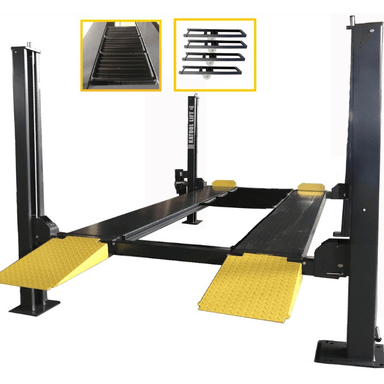
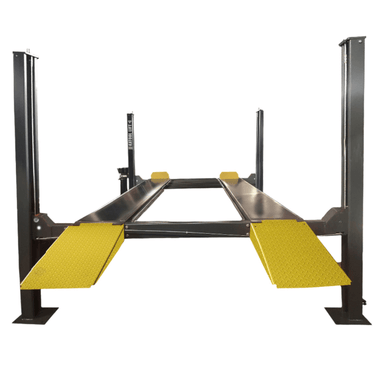
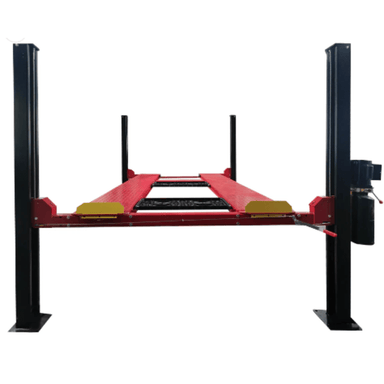
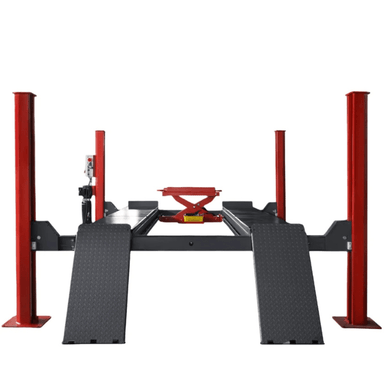
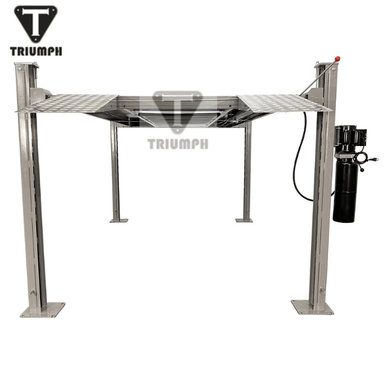
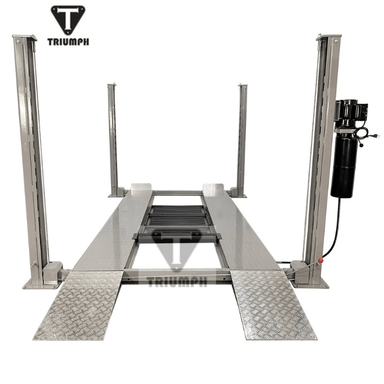
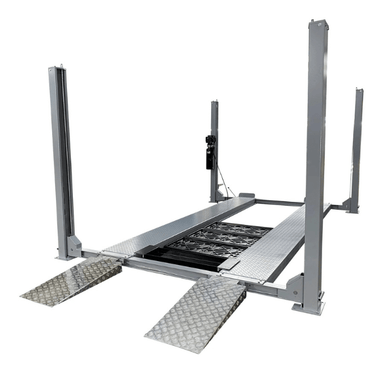
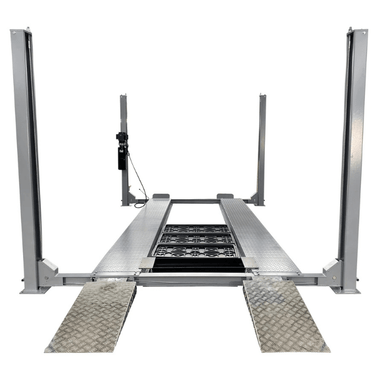
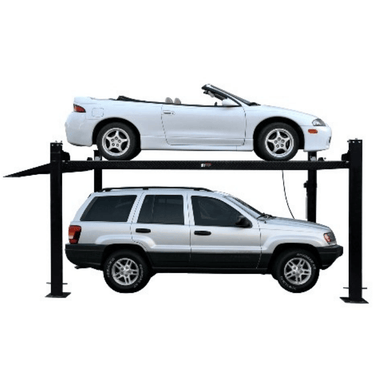
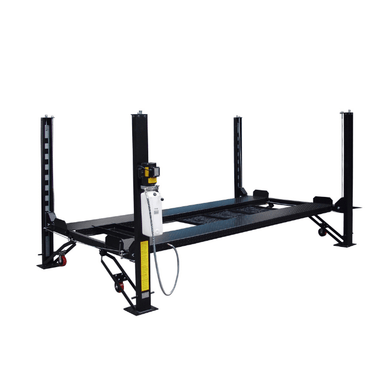
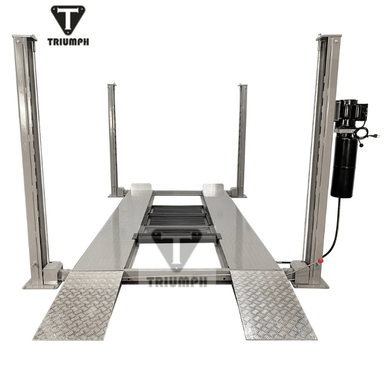
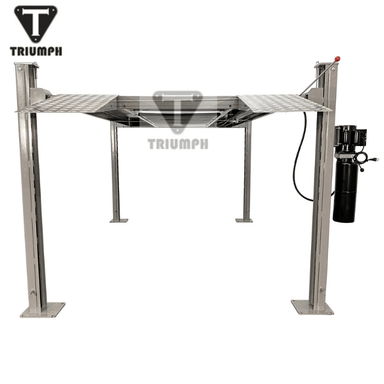
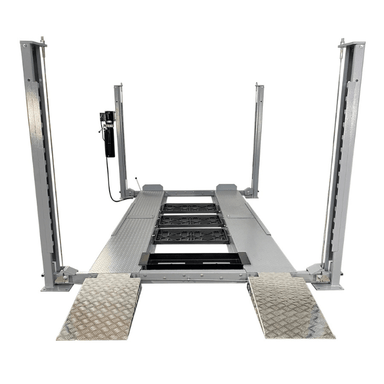
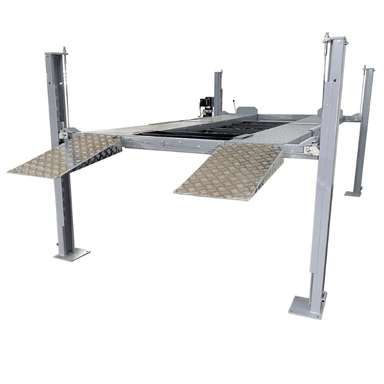
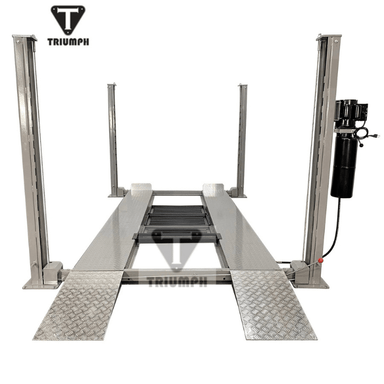
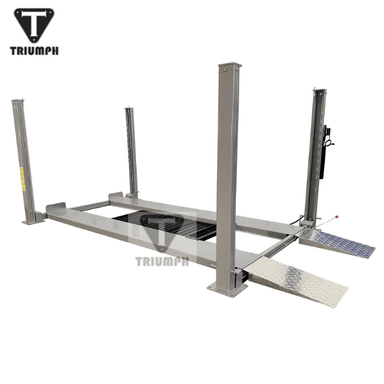
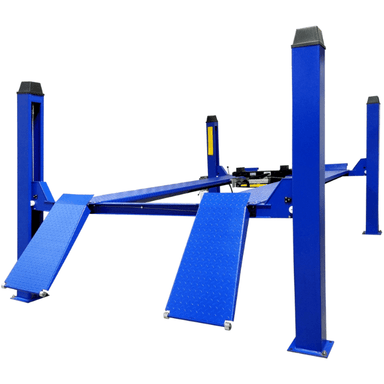
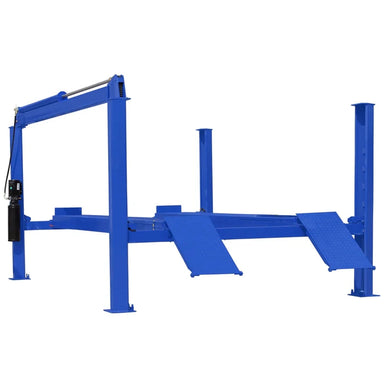
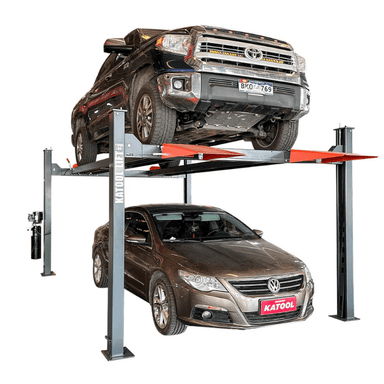
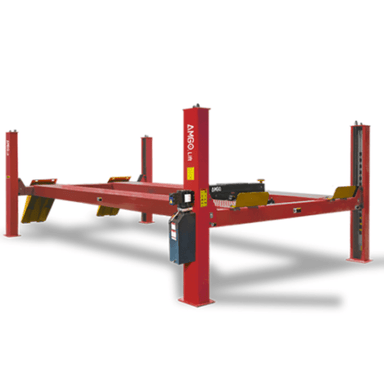
A four post car lift is the storage and service workhorse. Two pairs of vertical posts support two drive-on runways, and a hydraulic mechanism raises the entire platform with the vehicle on it. Drive on with your wheels, leave on your wheels. That's the magic of a 4-post: easier install than a 2-post, friendlier for DIY, and the only lift that doubles as long-term storage. Park a project car under your daily driver and reclaim half your garage.

Pitstop Pro stocks 62 four post car lifts for sale from 6 authorized brands (AMGO, Atlas, Triumph, Tuxedo, Katool, and iDEAL) in 7,000 lb, 8,000 lb (entry storage), 8,500 lb, 9,500 lb, 10,000 lb, 11,000 lb (sweet spot), 12,000 lb, 14,000 lb, 16,000 lb, 18,000 lb, 24,000 lb, and 32,000 lb (commercial truck) configurations. Drive-on storage models, service models with rolling-jack-ready runways, extra-long runways for trucks, and caster kits for portability.
Not sure which 4-post fits your bay? Use our Lift Finder for a sizing recommendation based on your vehicle, garage dimensions, and how you'll use it. Or call (470) 208-2754 for a real lift specialist.

Browsing 4-post lifts. See also all vehicle lifts, 2-post lifts, scissor lifts, and alignment lifts.

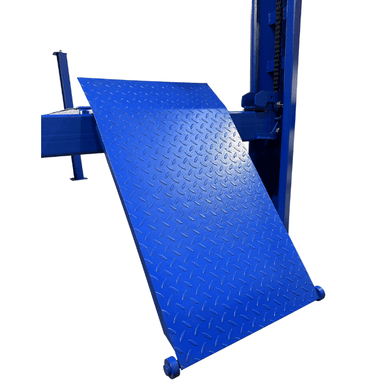
main collection page image for the 4 post car lifts collection

Why buy a 4 post car lift?

Four reasons four-post lifts are the most-installed home garage lift in America.

🅿

Doubles your parking

Stack a project car under your daily driver. Two cars in one parking space. The cheapest way to double the parking capacity of any two-bay garage.

🔧

DIY install friendly

Drive on, drive off, no chassis anchoring required. 4-post lifts don't bolt into your concrete the way 2-posts do, which makes home installation a one-weekend project with a helper.

Rolling-jack ready

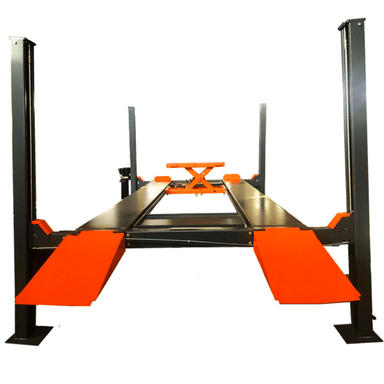
Most 4-post lifts accept an optional rolling bridge jack that runs between the runways. Lift the wheels off the ramps for brakes, suspension, or tire work — service jobs without a 2-post.

Move-it casters available

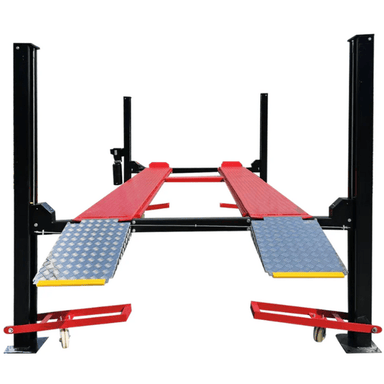
Most 4-post lifts accept a caster kit so you can roll the lift across the slab and reclaim the bay when you don't need it. Park it in a corner during winter and roll it back out for project season.

Shop four post car lifts by capacity

Match capacity to the heaviest vehicle you will lift, plus 15-20% margin. Don't undersize. A loaded F-150 routinely curbs at 5,000-5,500 lb.

Storage vs Service: which 4-post should you buy?

After capacity, this is the #1 decision. Both look similar but they're tuned for different jobs.

🅿
Storage 4-Post

Storage 4-Post Lift

  • Taller posts and runways tuned for maximum lift height.
  • Optimized for parking a second car underneath.
  • Often narrower between runways (matched to passenger-car wheelbases).
  • Casters and storage-friendly footprint standard.
  • Cheaper than service 4-post at same capacity.
Best for: Doubling parking capacity, long-term project storage, multi-car households, collector storage.
Service 4-Post

Service 4-Post Lift

  • Wider between runways to accept a rolling bridge jack.
  • Runway slots cut for jack-stand compatibility.
  • Often longer runways for trucks and full-size vehicles.
  • Heavier-duty posts engineered for service-cycle use.
  • Can do everything a 2-post can if you add a rolling jack.
Best for: DIY mechanics who want both storage AND service in one lift. Light commercial shops. Anyone who wants the option to lift wheels off for brakes and tires.

Doing the research first?

Read our 4-post buying guides before you choose.

4 Post Car Lift FAQs

The most common questions our lift specialists get specifically about four post car lifts.

What capacity 4 post lift do I need?

Match capacity to the heaviest vehicle you will lift, plus 15-20% margin. Quick guide for 4-post lifts: 7,000-8,500 lb covers sedans, sports cars, and small SUVs (Miata, 911, Civic, Corolla, CR-V). 9,000-11,000 lb covers full-size SUVs, half-ton pickups (F-150, Silverado 1500), and most crossovers — the sweet spot for home garages. 12,000-16,000 lb covers 3/4-ton and 1-ton pickups, large work vans, and RVs up to mid-size. 18,000-32,000 lb covers commercial trucks, box trucks, and heavy-duty service.

Don't undersize. A loaded F-150 routinely curbs at 5,000-5,500 lb. A 7K lift is borderline; 9K-10K is the safer minimum for half-ton pickups.

Storage vs service 4-post: which should I buy?

Storage 4-post lifts are optimized for parking a second car underneath. Taller posts, often narrower between runways (matched to passenger-car wheelbases), cheaper at same capacity. Best for doubling parking, long-term project storage, multi-car households, and collector storage.

Service 4-post lifts are tuned to accept a rolling bridge jack between the runways. Wider runway spacing, runway slots cut for jack stands, often longer runways for trucks. With a rolling jack added, a service 4-post does everything a 2-post can — brakes, suspension, tires, drivetrain — plus the storage.

If you only need storage: storage 4-post. If you want one lift that handles both storage AND wheels-off service: service 4-post with a rolling jack. Most DIY enthusiasts pick service 4-post for the flexibility.

Can a 4-post lift do the same work as a 2-post?

Almost. A 4-post by itself keeps the wheels on the runways, so you can do oil changes, transmission service, exhaust, drivetrain inspection, undercarriage detailing, and anything that doesn't require removing the wheels. Add a rolling bridge jack ($600-1,200) that rolls between the runways and lifts the vehicle off the platform, and you can do brakes, suspension, tires, axles — every job a 2-post does.

Where a 2-post still wins: serious wheels-off work where you need to drop a subframe, swap an entire suspension, or work fast in a high-volume shop. For 95% of DIY tasks, a service 4-post + rolling jack covers everything.

How much ceiling height do I need for a 4 post lift?

Most 4-post storage lifts need 10-12 ft of ceiling to reach full lift height with a vehicle on the runways. For just storage (parking one car under another), you typically need: max lift height + height of the bottom car's roof + safety clearance.

Example: an 11K storage lift with 75 in max lift, stored vehicle 60 in tall, plus 6 in clearance = 141 in or just under 12 ft of ceiling.

For lower-ceiling garages, look for storage-only 4-post lifts with shorter post heights, or use a mid-rise scissor lift instead. Some 4-posts offer adjustable lift heights that can be set lower if your ceiling is borderline.

Do I need to anchor a 4-post lift to the concrete?

No, anchoring is not required for most 4-post lifts in home garage use. The four posts and runway design spreads the weight evenly across the slab, and the vehicle's own weight keeps the lift stable. This is one of the biggest advantages of 4-post over 2-post — much easier DIY install.

Anchoring may be required in some jurisdictions for commercial use, or recommended for very heavy commercial 4-post lifts (24K+ capacity). Always check the manufacturer's install spec. Many home installations skip anchoring entirely; the lift sits on the concrete and is held in place by the load.

The slab still matters — see slab thickness FAQ below.

What concrete slab thickness for a 4 post lift?

Industry minimum is 4 in of 3,000+ PSI concrete for 4-post lifts up to 11,000 lb capacity. For 12,000-16,000 lb commercial 4-posts, specs typically require 4-6 in of 3,000+ PSI concrete. Heavier 18K+ commercial lifts often want 6 in of higher-PSI rated concrete.

Slab thickness is generally less critical for 4-post than 2-post because the load distributes across four post bases rather than being concentrated at two anchored posts. Most newer residential garages have adequate slab for a 4-post storage lift.

Can I install a 4-post lift myself?

Yes — 4-post lifts are commonly DIY-installed by handy homeowners. The lift arrives knocked down on a pallet, runways bolt to posts, cables route through the towers, hydraulic unit plugs in, and you drive the vehicle on for first test-lift. Plan a full day with one helper. No concrete anchoring required (in most cases), no chemical anchors, no rotary hammer drill.

What you do need: a level concrete slab, a forklift or engine hoist to position the assembled posts, basic hand tools, a 220V outlet (most models). Most manufacturers include detailed install instructions and many post install videos on YouTube.

Professional installation typically runs $300-700 in most metros if you'd rather not DIY. Call (470) 208-2754 for install quotes.

What electrical do I need for a 4 post lift?

Most home-grade 4-post lifts run on 110V or 220V single-phase depending on model. Smaller 7K-9K storage lifts often offer a 110V household-power option. Larger 10K+ models typically require 220V (same circuit as an electric dryer, NEMA 6-20 or 6-30 plug).

Commercial 4-post lifts 18K+ often use 220V/440V three-phase, which is typically only available in commercial buildings.

Check the lift's spec sheet before ordering. If you need 220V and don't have it at your bay yet, an electrician can run a dedicated 220V circuit in a day for $300-600.

Can I add a rolling jack to my 4-post lift?

Yes — most service-style 4-post lifts accept a rolling bridge jack as a factory option. A rolling jack is essentially a small hydraulic jack that rolls between the runways on rails. Position it under an axle or pinch-weld, pump it up, and lift the wheels off the runways for brakes, tires, or suspension work.

Rolling jacks typically run $600-1,200 and are sized to match your lift's runway width. Not all 4-post lifts accept jacks — storage-only models with narrower runways usually don't. Check the lift's spec sheet, or look for "rolling jack ready" or "service 4-post" in the product description.

Can I add casters to move my 4-post lift?

Yes — most 4-post lifts accept an optional caster kit (~$200-400) that lets you roll the lift across the slab when you don't need it. Park the lift in a corner of the garage during winter, roll it out for project season, or shuffle bays when needed.

Note: casters work for moving the empty lift, not a loaded one. Lower the lift fully, remove the vehicle, attach casters, then roll. Some heavier 4-post lifts (18K+) don't accept casters because the lift weight is too high to roll safely.

How wide between posts on a 4-post lift?

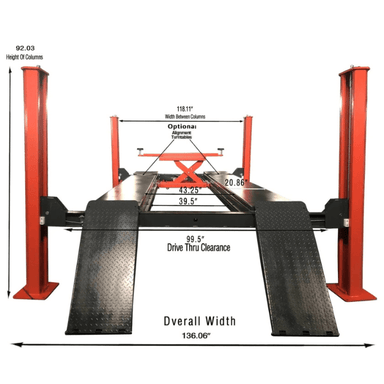
4-post lift dimensions vary by model. Typical outside-post widths for our lineup: 7K-8K lifts run 100-110 in wide. 9-11K sweet-spot models run 105-115 in wide. 12K+ wide-stance and service models run 115-130+ in wide.

Inside runway widths (the gap between runways) typically run 33-44 in for storage models, 38-52 in for service models. The wider inside spacing on service 4-posts is what accommodates a rolling jack.

Measure your bay before ordering. Most 4-post lifts need at least 12-14 ft of total bay width to allow drive-on access plus side clearance.

How long do 4 post car lifts last?

A properly used and maintained 4-post storage lift will last 25-40+ years in home garage use. The hydraulic cylinder, safety locks, and cable systems are the wear items; the steel posts and runway structure typically outlast the lift's useful life.

Common wear-item replacements over the lift's life: hydraulic seals (10-15 years), safety cables (15-20 years), hydraulic fluid (annually). Annual fluid change, monthly visual inspection, and lubrication of the safety locks is the minimum maintenance to hit those lifespan numbers.

How long is shipping on a 4 post car lift?

Most in-stock 4-post lifts ship within 2-5 business days from our Georgia warehouses or one of our 42 pickup locations. Freight transit time depends on distance, usually 3-7 business days to the contiguous US. Total order-to-doorstep is typically 1-2 weeks.

Pickup is available at our warehouses for customers who want to grab their lift the same week and save on freight.

What's the warranty on a 4 post lift?

Warranties vary by brand. AMGO: 5 years structural, 2 years hydraulic, 1 year wear. Atlas: 2 years parts and labor on most Platinum lifts. Triumph: 5 years structural, 1 year wear. Tuxedo: 2-5 years structural depending on model. Katool: 1-2 years parts on most models.

All warranties are direct from manufacturer. Pitstop Pro handles claims as the authorized dealer.