
Skip to content

Vehicle Scissor Lifts

Vehicle Scissor Lifts For Sale

Car Scissor Lifts For Sale: Low-Rise, Mid-Rise & Full-Rise

Shop automotive scissor lifts for sale from 3 authorized brands: AMGO, Atlas, and Katool. 6,000 lb to 16,000 lb capacities. Low-rise pad-style lifts for under-vehicle access, mid-rise lifts for body and tire service, full-rise lifts that replace a 2-post in low-ceiling garages. Portable and stationary options. 42 pickup locations nationwide.

42Pickup Locations
3 BRANDSIn Stock
6K – 16KLb Capacity

Filters


About Scissor Lifts

Car scissor lifts for sale, from low-rise to full-rise

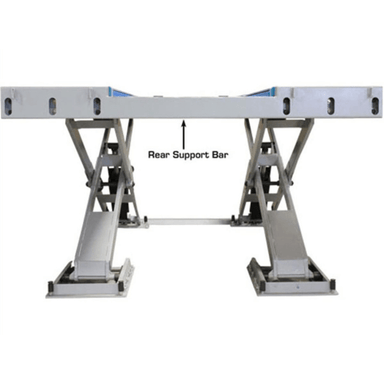
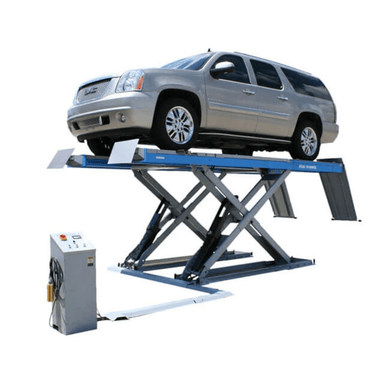
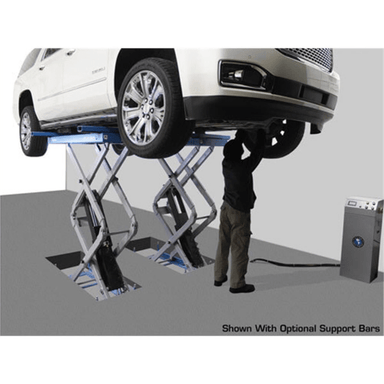
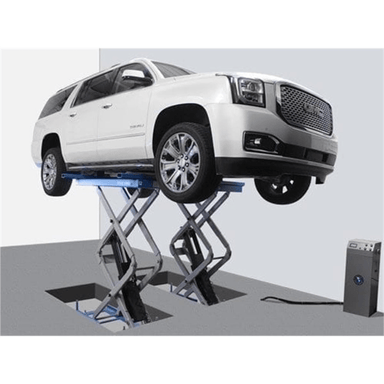
A vehicle scissor lift uses an X-pattern scissor mechanism to raise a car straight up from the ground, without posts or overhead structure. No anchored columns, no overhead beam, no ceiling clearance penalty. That makes scissor lifts the right answer for low-ceiling garages, portable setups, body shops, tire shops, detail bays, and home garages where a 2-post or 4-post simply will not fit.

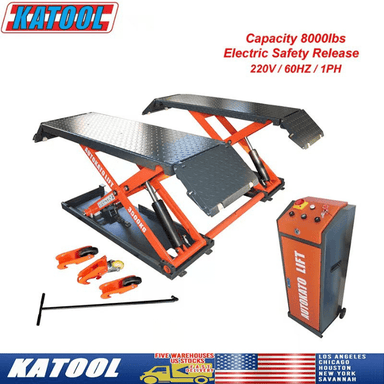
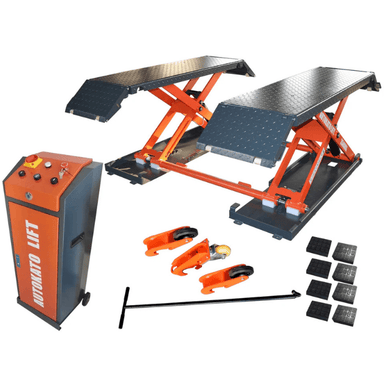
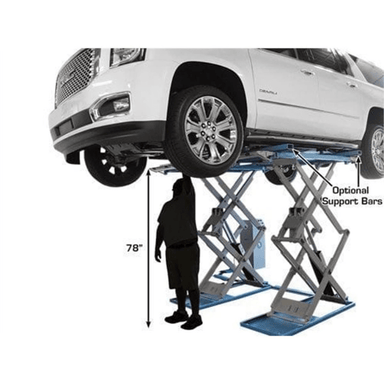
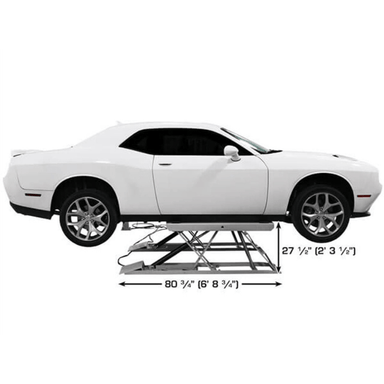
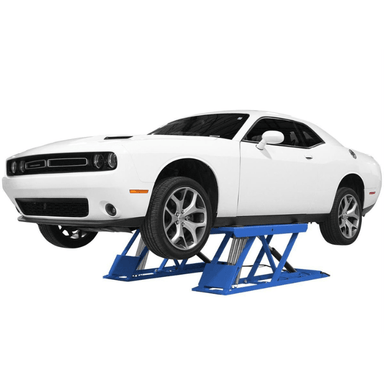
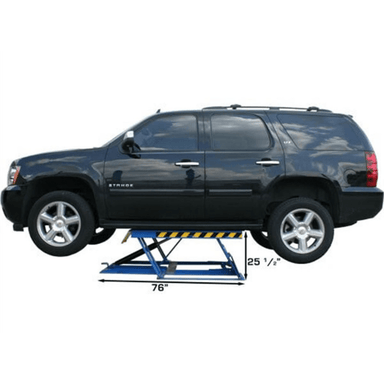
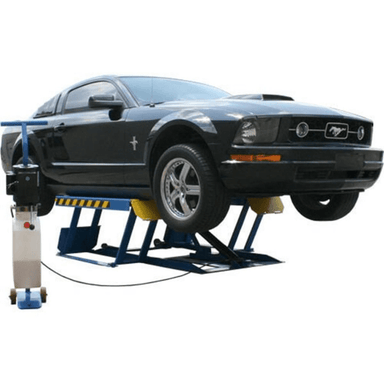
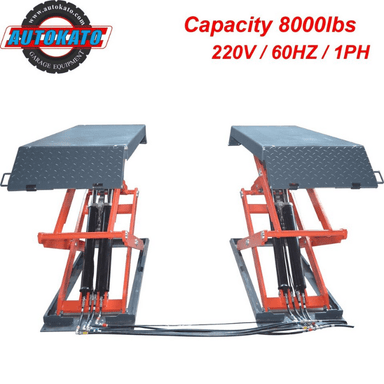
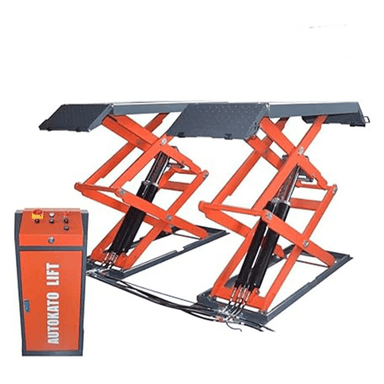
Pitstop Pro stocks 14 automotive scissor lifts for sale from 3 authorized brands: AMGO, Atlas, and Katool. Capacities run 6,000 lb to 16,000 lb, with three lift-height categories: low-rise pad-style lifts (6-12 in lift, for under-vehicle access on tires and brakes), mid-rise lifts (36-48 in, for body service without removing wheels), and full-rise scissor lifts (5-6 ft, full body access just like a 2-post). Portable and stationary configurations.

Tight on ceiling height? Need a portable lift for a rented bay? Want body access without the 2-post commitment? Call (470) 208-2754 for a recommendation. Or use our Lift Finder.

Browsing scissor lifts. See also all vehicle lifts, 2-post lifts, 4-post lifts, and alignment lifts.

Main collection page image for the vehicle scissor lift collection page

Why buy a vehicle scissor lift?

Four reasons scissor lifts are the right pick when a 2-post or 4-post won't work.

Low-ceiling friendly

No overhead beam, no tall posts. Mid-rise scissor lifts fit under 8 ft ceilings. Full-rise scissor lifts fit under 11 ft ceilings — about a foot less than a comparable 2-post.

Portable options

Most low-rise and mid-rise scissor lifts roll on integrated wheels or removable casters. Reposition seasonally, work multiple bays, or take the lift to the car instead of the car to the lift.

No overhead structure

Lifts the car straight up from underneath. No posts in the way for tall trucks, no overhead bar to dent a roof. The right pick when vehicle clearance trumps everything else.

$

Mid-rise is the price champion

Mid-rise scissor lifts start at $1,800 — cheaper per pound of capacity than any other vehicle lift type. The right pick for tire, brake, and suspension work on a tight budget.

Doing the research first?

Read our buying guides before you choose a scissor lift.

Vehicle Scissor Lift FAQs

The most common questions our lift specialists get specifically about car scissor lifts.

Low-rise vs mid-rise vs full-rise scissor lift: which do I need?

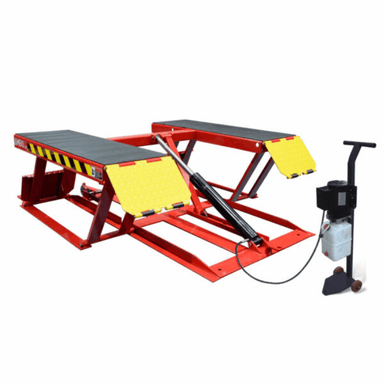
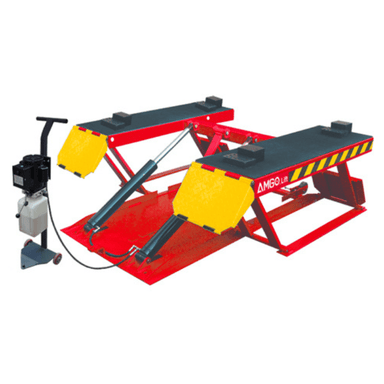
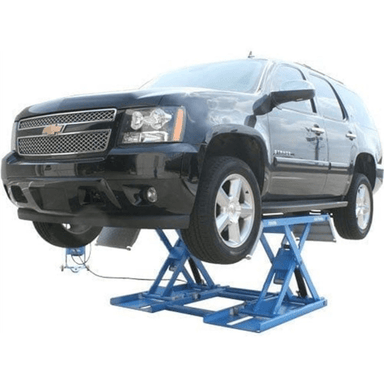
Low-rise (6-12 in lift): Vehicle frame rests on rubber pads. Just enough clearance to remove wheels for tire and brake work. Highly portable. The right pick for fast tire and brake jobs, not for under-vehicle body work.

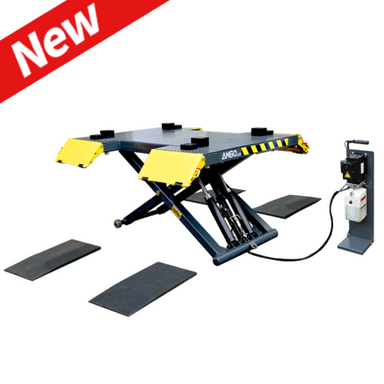
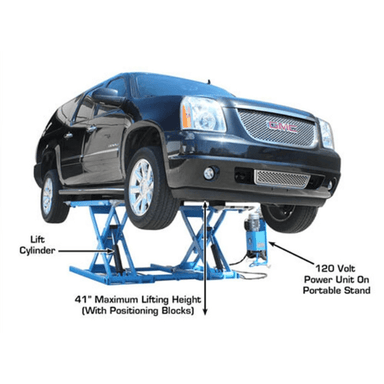
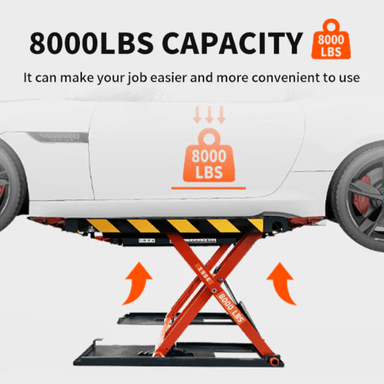
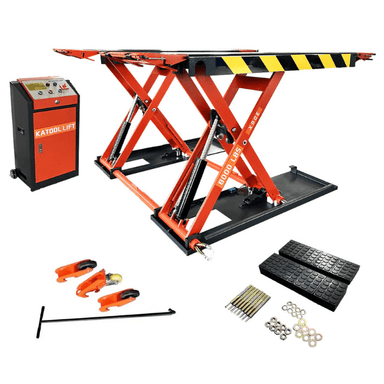
Mid-rise (36-48 in lift): Drive-on runways lift the vehicle to chest height. Full body work without removing wheels (brakes, exhaust, suspension, detail). The sweet spot for low-ceiling DIY garages. Cheapest per-pound of lifting capability in the catalog.

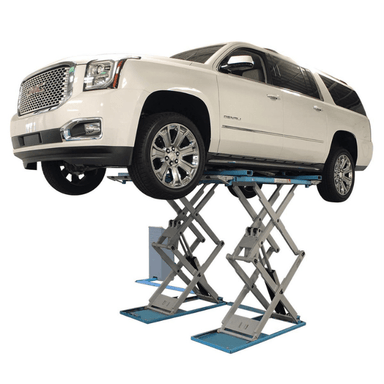
Full-rise (5-6 ft lift): Full lift height like a 2-post or 4-post, but without overhead structure. The right pick for pro shops with low ceilings that need real full-service capability.

Most home garage DIY enthusiasts pick mid-rise. Pro shops choose full-rise. Tire shops and quick-service bays choose low-rise.

What capacity scissor lift do I need?

Match capacity to the heaviest vehicle you will lift, plus 15-20% margin. Our scissor lifts run 6,000 lb to 16,000 lb. 6,000 lb covers sedans, sports cars, and small SUVs. 7,000-8,000 lb covers full-size SUVs and half-ton pickups (the sweet spot for home garages). 9,000-12,000 lb covers 3/4-ton pickups and larger SUVs. 16,000 lb covers 1-ton dually trucks and commercial vans.

Don't undersize. A loaded F-150 routinely curbs at 5,000-5,500 lb. A 6K scissor lift is borderline; 8K is the safer minimum for half-ton pickups.

How much ceiling height do I need for a scissor lift?

This is the biggest scissor-lift advantage. Required ceiling depends on rise height plus vehicle:

Low-rise: Fits any garage with 7 ft+ ceiling. The vehicle only lifts 6-12 in off the ground.

Mid-rise: Fits under 8 ft ceilings comfortably. Vehicle lifts ~3-4 ft off the ground, leaving 4 ft of headroom in an 8 ft garage.

Full-rise: Fits 10-11 ft ceilings — about a foot less than a comparable 2-post. The biggest reason to choose a full-rise scissor over a 2-post is low-ceiling installation.

Are portable scissor lifts as safe as bolt-down lifts?

Yes, when used correctly. Portable scissor lifts use the vehicle's own weight to keep the lift planted on the slab during operation. Mechanical safety locks engage at every few inches of lift, so the load doesn't depend on hydraulic pressure alone. Properly positioned on a flat, clean slab with the vehicle centered, a portable scissor lift is as safe as any other lift type.

Where portability adds risk: uneven slabs, debris under the lift base, or operating on wet surfaces. Always check the slab is flat and clean before use. ALI certifies several portable scissor models — look for ALI ETL marking if commercial-grade safety certification matters.

Can a scissor lift replace a 2-post lift?

A full-rise scissor lift can replace a 2-post for most service work — brakes, suspension, exhaust, drivetrain, axles. Full-rise scissors get the vehicle to chest height with wheels free if the lift is configured with a wheels-free style. The key advantage: a full-rise scissor fits in a garage where a 2-post wouldn't (low ceilings, rented bay with no anchoring allowed, frequent repositioning needed).

Where a 2-post still wins: high-volume pro shops doing 20+ lifts per day, very heavy commercial vehicles, or service work where you need to drop a subframe or transmission with maximum overhead clearance.

For most home DIY enthusiasts, a full-rise scissor lift is a credible alternative to a 2-post — especially in low-ceiling garages.

What concrete slab do I need for a scissor lift?

Most scissor lifts require 4 in of 3,000+ PSI concrete minimum. Heavier commercial 12K+ scissor lifts often want 6 in. Slab requirements are generally less strict for scissor lifts than 2-post lifts because the load distributes across the scissor base rather than being concentrated at anchored posts.

Portable scissor lifts (LR06, LR10, MRP06, 7K-Kwik-Bay) don't anchor to the slab — they sit on it. Slab thickness is less critical for these, but the slab still needs to be flat and clean.

What electrical do I need for a scissor lift?

Most scissor lifts in our catalog run on 110V household power or 220V single-phase. Smaller low-rise and mid-rise portable lifts often use 110V (slower lift speed but works on any garage outlet). Larger 9K+ scissor lifts typically require 220V.

Pneumatic options are also common — some Katool mid-rise lifts (KT-X80) can run on shop compressed air at 80-150 PSI in addition to or instead of electric power. Useful in shops that already have an air compressor running.

Can I install a scissor lift myself?

Yes — scissor lifts are the easiest type of vehicle lift to install. Portable models require no installation at all — uncrate, plug in, ready to lift. Stationary mid-rise and full-rise scissor lifts need to be bolted down (anchors to slab), positioned, and connected to power. Plan a half-day to a full day with one helper.

In-ground full-rise scissor lifts (Atlas FM9SL) require excavation and concrete work — these should be professionally installed.

Call (470) 208-2754 for install quotes if you'd rather not DIY.

How long do scissor lifts last?

A properly used and maintained scissor lift will last 15-25+ years in home garage use, 10-15 years in high-volume pro shops. Wear items include hydraulic cylinder seals (5-10 years), safety lock pins (10-15 years), and hydraulic fluid (annually).

Scissor lifts have more moving parts than 2-post or 4-post lifts (the scissor mechanism, pivot pins, multiple hydraulic stages), so annual inspection and maintenance is more important. Most manufacturers recommend pivot point lubrication every 200 lift cycles and full hydraulic fluid change annually.

Are scissor lifts ALI certified?

Some are. ALI ETL certification on scissor lifts is less common than on 2-post and 4-post lifts because the scissor lift category includes many portable and lower-capacity models that don't always pursue commercial certification.

Atlas full-rise scissor lifts (SLP9K, FM9SL) and most AMGO commercial scissor lifts (AX-12, AX-12A, AX-16A) carry ALI ETL certification. AMGO alignment scissor lifts (AX-12A, AX-16A) are ALI certified for commercial alignment use.

If you need ALI certification (commercial pro-shop use, insurance, alignment work), filter to the certified models or call (470) 208-2754.

How long is shipping on a vehicle scissor lift?

Most in-stock scissor lifts ship within 2-5 business days from our Georgia warehouses or one of 42 pickup locations. Freight transit time depends on distance, usually 3-7 business days to the contiguous US. Total order-to-doorstep is typically 1-2 weeks.

Portable scissor lifts (low-rise and some mid-rise) often ship lighter than 2-post or 4-post lifts so freight is cheaper. Pickup is available at our warehouses to grab the lift the same week.

What's the warranty on a scissor lift?

Warranties vary by brand. AMGO: 5 years structural, 2 years hydraulic, 1 year wear. Atlas: 2 years parts and labor on most Platinum scissor lifts. Katool: 1-2 years parts on most scissor models.

All warranties are direct from manufacturer. Pitstop Pro handles claims as the authorized dealer.


logo-paypal paypal