
⭐⭐⭐⭐⭐ 4.6 / 5.0 700+ Reviews | No Sales Tax Outside GA or IL | Military Discounts Available
Skip to content

Wheel Alignment Machines

Wheel Alignment Machines & Aligners For Sale

Wheel Alignment Machines For Sale: 2D Reflector & 3D Imaging Systems

Shop wheel alignment machines and aligners for sale from 2 authorized brands: Katool and iDEAL. From 2D reflector-based systems for general repair shops to 3D imaging-camera systems for high-volume alignment shops, plus heavy-duty multi-axle aligners for fleet and truck service. Pairs with our alignment lifts for a complete bay setup. 42 pickup locations nationwide.

42Pickup Locations
2 BRANDSKatool & iDEAL
3D / 2DCamera & Reflector

Filters

About Wheel Alignment Machines

Wheel alignment machines and aligners for sale, from entry shops to multi-axle truck service

A wheel alignment machine (also called an alignment system or wheel aligner) measures the geometric angles of a vehicle's wheels — primarily camber, caster, toe, and thrust angle — and tells the technician exactly how much adjustment each wheel needs to bring the vehicle back into factory spec. Without an alignment machine, you can't offer wheel alignment service. With one, alignment becomes one of the highest-margin services in any auto shop.

Pitstop Pro stocks 7 wheel alignment machines for sale from 2 authorized brands: Katool and iDEAL. Two technology generations: 2D reflector-based systems (entry tier, mid-tier accuracy, $4,000-$5,500) and 3D imaging camera systems (faster, higher accuracy, $5,900-$24,600). Compatible with 2-post lifts, 4-post alignment racks, and scissor lifts. Most pro shops also buy a matched alignment lift — see our alignment lifts collection for the full bay package.

Not sure which alignment machine fits your shop volume and budget? Call (470) 208-2754 for a recommendation based on your alignment lift, daily volume, and accuracy requirements.

Browsing wheel alignment machines. See also alignment lifts, tire changers, wheel balancers, and all tire & wheel equipment.

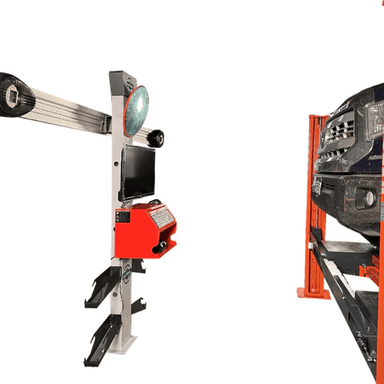
Hero image for the wheel aligner collection page

Why a real wheel alignment machine matters

Four reasons alignment service is one of the highest-ROI additions to any auto shop.

💰

$80-150 per alignment

Standard 4-wheel alignment service runs $80-150 retail. With an alignment machine paying back $15-30K total cost over 1-2 years of normal shop volume, ROI is fast and the recurring revenue continues for the life of the equipment.

Precision camber/caster/toe

Modern alignment machines measure to 0.01-degree accuracy on camber, caster, toe, thrust angle, and steering axis inclination. The accuracy required by every modern vehicle's factory spec sheet.

📋

Built-in vehicle database

Pre-loaded specifications for thousands of vehicle makes, models, and years. Software prints before/after reports for the customer and stores history for future reference.

🛞

Pairs with alignment lifts

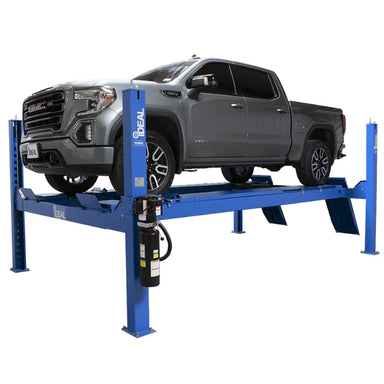
A wheel alignment machine needs an alignment lift with turn-plates and slip-plates underneath. Buy the system together for a complete bay setup and save vs sourcing separately.

2D Reflector vs 3D Imaging Wheel Aligner: which should you buy?

The #1 alignment-machine decision. Both measure camber, caster, and toe. They differ in how the targets are read.

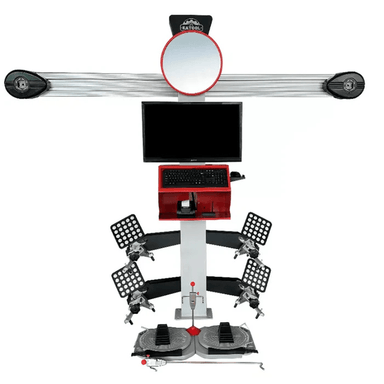
2D Reflector

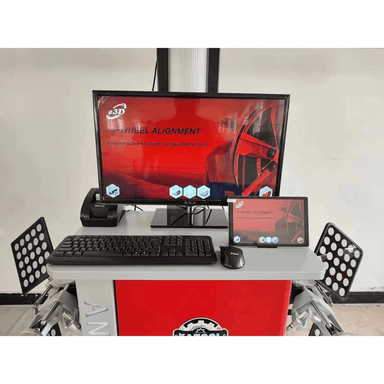
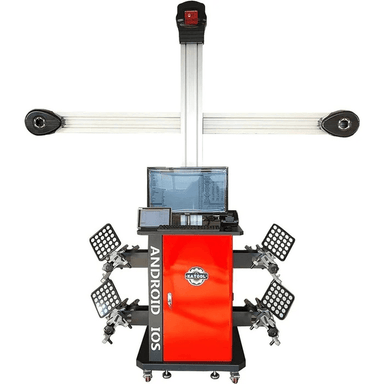
2D Reflector Alignment System

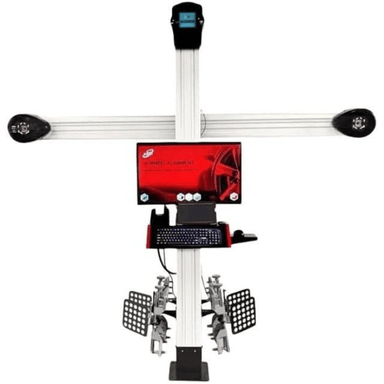
  • Reflective targets clamp to each wheel. A crossbeam emitter reads the targets.
  • Lower price point ($4,000-$5,500). The entry-level alignment system.
  • Slightly slower setup per vehicle (5-10 min target installation).
  • Mid-tier accuracy. Good for general repair work where alignment is an add-on service.
  • Software vehicle database covers most popular makes and models.
Best for: General repair shops adding alignment as a revenue line, used-car lots, light-volume tire shops.
3D Imaging

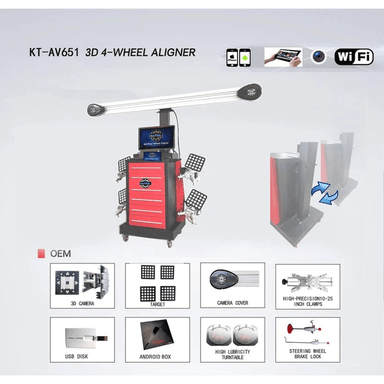
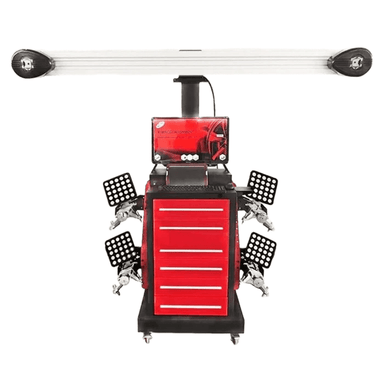
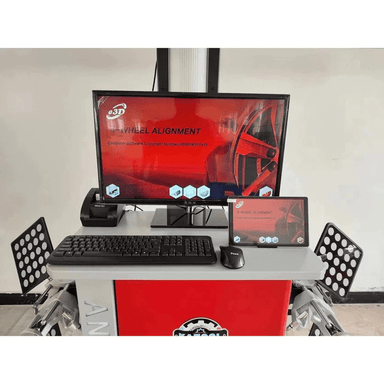
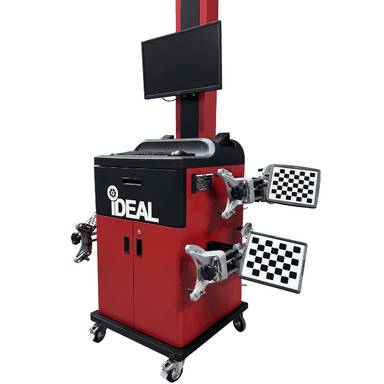
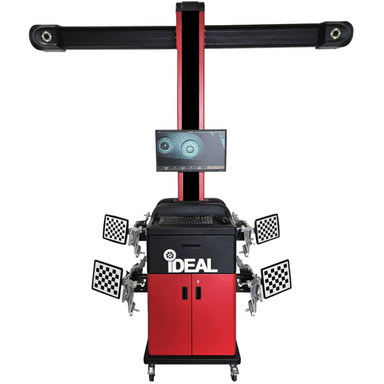
3D Imaging Camera Alignment System

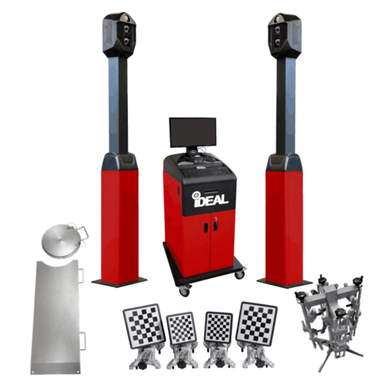
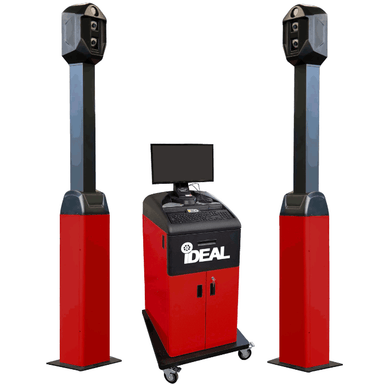
  • Dual high-resolution cameras read passive 3D targets clamped to each wheel.
  • Higher accuracy. Faster setup (2-5 min per vehicle).
  • Larger vehicle database. Software updates included.
  • Higher price point ($5,900-$14,000+).
  • Auto-calibrating cameras on premium models (Katool KT-AV9, iDEAL IWA series).
Best for: Dedicated alignment shops, dealerships, performance shops, and any operation doing 5+ alignments per day.

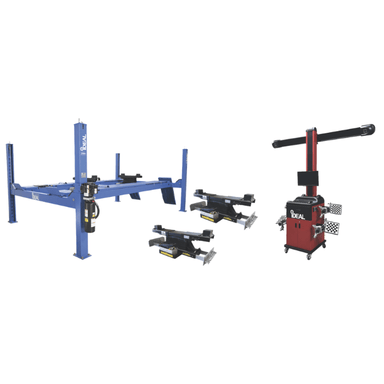
Bundle & save: iDEAL Alignment Lift + 3D Aligner Combo

Buy the 14K ALI-certified iDEAL FP14KAC-X alignment lift, the IWA-60-2000T-K 3D iPRO aligner, AND two 7K rolling bridge jacks together as a single bundle. Everything you need to start an alignment bay from a single vendor with consolidated freight.

From $23,750 (bundle)
View Combo →
iDEAL alignment lift + wheel aligner combo bundle

Doing the research first?

Read related buying guides and explore the alignment bay ecosystem.

Wheel Alignment Machine FAQs

The most common questions our alignment-equipment specialists get about wheel aligners.

2D reflector vs 3D imaging wheel aligner: which should I buy?

2D reflector systems use a crossbeam emitter and reflective targets clamped to each wheel. Cheaper ($4,000-$5,500), slightly slower setup, mid-tier accuracy. Best for general repair shops offering alignment as an add-on.

3D imaging systems use high-resolution dual cameras reading 3D passive targets. Higher accuracy, faster setup per vehicle (2-5 min vs 5-10 min), larger vehicle database, software updates included. Premium price ($5,900-$24,000). Best for dedicated alignment shops, dealerships, and performance shops.

If you do 1-3 alignments a day: 2D is fine. If you do 5+ alignments a day: 3D pays for itself in saved labor time within 12-18 months.

Do I need an alignment lift with the wheel alignment machine?

Yes. The alignment machine reads wheel angles, but you need a vehicle lift with turn-plates at the front and slip-plates at the rear to actually perform an alignment. Without those, the wheels can't move freely under load and your measurements are inaccurate.

Most pro shops buy a matching alignment lift at the same time. See our Alignment Lifts collection for 4-post and scissor alignment lifts compatible with these alignment machines. The iDEAL combo on this page bundles the lift + aligner together for bundle savings.

What's the difference between Katool and iDEAL alignment systems?

Katool alignment machines are mid-price systems built for general repair shops adding alignment as a revenue line. 2D reflector ($4,000-$5,500) and entry 3D camera ($4,000-$6,000) options. Solid vehicle databases, basic software, reliable measurement at an affordable price.

iDEAL alignment machines are premium pro-shop systems built for dedicated alignment shops and dealerships. 3D iPRO imaging starting at $13,400, plus heavy-duty multi-axle options up to $24,600. Larger vehicle databases, more sophisticated software, faster cycle times.

For new alignment offerings: Katool. For dedicated alignment shops: iDEAL. We can mix and match — iDEAL alignment lift with Katool aligner is a valid budget setup.

Can a wheel alignment machine work with any lift?

The alignment machine itself is lift-independent — it sits on the floor or mounts to a cabinet and reads targets clamped to the wheels. What matters is the lift the vehicle sits on. The lift must have turn-plates (front) and slip-plates (rear) for accurate alignment.

Most Katool alignment machines explicitly list compatibility with 2-post lifts (with separate turn-plates installed on the ground) and scissor lifts (with built-in turn-plates). iDEAL alignment machines pair with iDEAL alignment lifts but work with most ALI-certified alignment racks.

How accurate is a 3D imaging wheel aligner?

Modern 3D imaging alignment systems measure to 0.01-degree accuracy on camber, caster, and toe. That's roughly 10x more accurate than what was possible with old-style fixed-sensor alignment systems and tighter than any factory alignment spec requires.

Real-world accuracy depends more on the technician installing the targets correctly than on the camera resolution itself. Wheel runout (out-of-round wheels) is the biggest source of measurement error — every modern system automatically compensates for wheel runout during setup.

Does the alignment machine come with a vehicle database?

Yes. Every alignment machine in our catalog includes a pre-loaded vehicle database with factory alignment specifications for thousands of makes, models, and years. Software updates with new vehicles are included for the first year (sometimes longer depending on the model).

After the included period, ongoing software updates are typically a small annual fee ($100-300/year for Katool, $300-500/year for iDEAL). Keeps your database current as new model years are released.

How long is shipping on a wheel alignment machine?

Most in-stock wheel alignment machines ship within 2-5 business days from our Georgia warehouses or one of 42 pickup locations. Freight transit time depends on distance, usually 3-7 business days to the contiguous US. Total order-to-doorstep is typically 1-2 weeks.

Larger pro-shop alignment systems and the iDEAL combo bundle may have longer lead times (3-4 weeks) if specific configurations ship from the manufacturer's central warehouse. We confirm at order time.

Can I install a wheel alignment machine myself?

Mostly yes. The alignment machine itself is plug-and-play — assemble the cabinet/stand, mount the cameras or crossbeam, connect to power, install software. Plan 2-4 hours with one helper.

The complication is calibration. Camera-based 3D systems require initial calibration in the bay where they'll be used. Newer auto-calibrating systems (Katool KT-AV9, iDEAL IWA series) handle this automatically. Older systems may require a manufacturer technician for initial calibration.

For dedicated alignment shops, we recommend professional installation and initial calibration. Call (470) 208-2754 for install quotes.

What ongoing maintenance does a wheel alignment machine need?

Minimal. Annual software updates as discussed above. Wipe cameras/sensors clean monthly. Replace target clamps if damaged (~$30-50 per clamp). Replace turntables if worn — typically every 5-7 years of heavy use.

For pro-shop ALI Alignment-Rack compliance, annual ALI inspection of the alignment lift is required (not the machine). The alignment machine itself doesn't have an annual inspection requirement, just normal calibration verification when measurements drift.

What's the warranty on a wheel alignment machine?

Warranties vary by brand. Katool: 1-2 years on most alignment machine components, software updates included for 1 year. iDEAL: 2 years parts and labor with extended software/calibration coverage available.

All warranties are direct from manufacturer. Pitstop Pro handles claims as the authorized dealer.

How does a wheel alignment machine compare to a Hunter alignment machine?

Hunter is the premium-tier alignment machine brand in North America. Hunter systems are widely used in dealerships and high-end alignment shops, with prices starting around $25,000 and going up to $60,000+ for top-tier 3D imaging systems.

The Katool and iDEAL alignment machines in our catalog cover similar use cases at lower price points. The iDEAL IWA-60-2000T-K ($13,400) and IWA-60-8500-HD-K ($24,600) target the same pro-shop market as mid-tier Hunter systems. For shops on a tighter budget, Katool offers credible 2D and entry 3D options at $4,000-$5,900.

Pitstop Pro does not sell Hunter alignment machines. If you want Hunter specifically, contact Hunter Engineering or a Hunter authorized dealer.

How long does an alignment take with a 3D imaging system?

An experienced technician on a modern 3D imaging system can complete a full 4-wheel alignment in 30-45 minutes. That includes target installation, measurement, adjustment, re-measurement, and printing the customer's alignment report. 2D reflector systems take 45-60 minutes for the same job.

The savings on a busy shop adds up fast — 15 minutes per alignment x 6 alignments per day = 1.5 hours of labor savings per day, or roughly $50-100 per day in tech-cost reduction. Pays back the 3D upgrade over 2-3 years just from labor savings.