
⭐⭐⭐⭐⭐ 4.6 / 5.0 700+ Reviews | No Sales Tax Outside GA or IL | Military Discounts Available
Skip to content

Tire Changers

Tire Changers & Tire Machines For Sale

Tire Changers & Tire Machines For Sale: Car, Pro Shop & Heavy-Duty Truck

Shop tire changers and tire machines for sale from 3 authorized brands: Katool, Triumph, and Tuxedo. Standard wheel-clamp tire changers for cars and light trucks, premium tilt-back and center-post machines with helper arms for run-flat and low-profile tires, plus heavy-duty truck tire changers for 17.5 in to 26 in commercial wheels. 42 pickup locations nationwide.

42Pickup Locations
3 BRANDSIn Stock
10" – 26"Rim Capacity

Filters

About Tire Changers

Tire changers and tire machines for sale, built for cars, trucks, and pro shops

A tire changer (also called a tire machine or tire changing machine) is the centerpiece of any tire shop. It breaks the bead seal between tire and rim, demounts the old tire, mounts a new one, and re-seats the bead — all in roughly 90 seconds per wheel for an experienced operator. Without one, every tire change is a back-breaking pry-bar job. With one, your shop turns over tires fast enough to make tire service a real revenue line.

Pitstop Pro stocks tire changers for sale from 3 authorized brands: Katool, Triumph, and Tuxedo. Capacities run 10 in to 26 in maximum rim diameter across three application tiers: standard car/light-truck wheel-clamp machines for everyday passenger tires, premium tilt-back and center-post machines with helper arms for run-flats and low-profile tires, and heavy-duty truck tire changers for commercial 17.5 in to 26 in wheels.

Not sure which tire machine fits your shop volume? Call (470) 208-2754 for a recommendation based on your typical wheel size, tire types, and daily volume.

Browsing tire changers. See also wheel balancers, tire changer and balancer combos, wheel alignment machines, and all tire & wheel equipment.

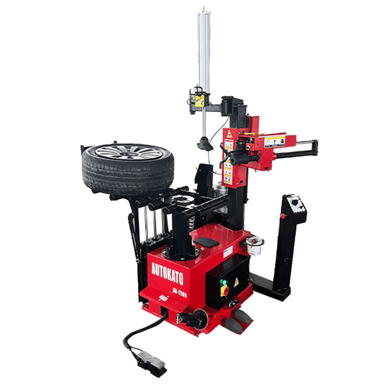
Hero image for the tire changer collection page

Why every tire shop runs a tire changer

Four reasons a real tire machine pays for itself in a few months of service work.

90-second tire changes

A trained operator on a modern tire changer pulls and mounts a wheel in 60-120 seconds. The same job by hand with pry bars is 15-30 minutes per wheel — and ruins the bead seal half the time.

💰

Real shop revenue

Tire mounting and balancing is one of the highest-margin services in an auto shop. A $30-50 per wheel charge times 4 wheels times 5-10 cars a day adds up fast. Equipment ROI typically inside 6-12 months.

🛞

Handles low-profile & run-flat

Modern low-profile and run-flat tires are nearly impossible to mount by hand without damaging the bead or sidewall. Pro tire changers with helper arms and tilt-back columns handle these without drama.

🛡

Protects rims from damage

Plastic-coated mount/dismount heads and helper-arm rollers grip the rim without scratching wheels — critical for modern alloy and chrome wheels where customer-damage claims cost more than the tire change.

Swing-Arm vs Tilt-Back Tire Changer: which should you buy?

After capacity, the #1 tire-changer decision. Both mount and dismount tires. They differ in how the mount head positions over the wheel.

Swing-Arm

Swing-Arm Tire Changer

  • Vertical column with a horizontal arm that swings out of the way for wheel loading.
  • Lower price point — entry tire changers are typically swing-arm.
  • Mount head locks at fixed height; operator manually adjusts for each rim diameter.
  • Works fine for standard tires and most aftermarket wheels up to 22 in.
  • Smaller footprint than tilt-back models.
Best for: General repair shops, used-car lots, and shops with mostly standard passenger tires. Entry price tier.
Tilt-Back

Tilt-Back Tire Changer

  • Mount column tilts back to clear large rims and accommodate low-profile/run-flat tires.
  • Self-centering mount head — less operator adjustment needed per wheel.
  • Standard helper arm slot — bolt on an assist arm for run-flat tire work.
  • Faster wheel-to-wheel cycle time.
  • Premium price tier.
Best for: Tire shops, performance/exotic shops, and any operation handling run-flat or low-profile tires regularly.

Doing the research first?

Read related buying guides and explore the tire & wheel ecosystem.

Tire Changer FAQs

The most common questions our tire-equipment specialists get about tire machines.

What size tire changer do I need for my shop?

Match the tire changer to your typical work. Quick guide:

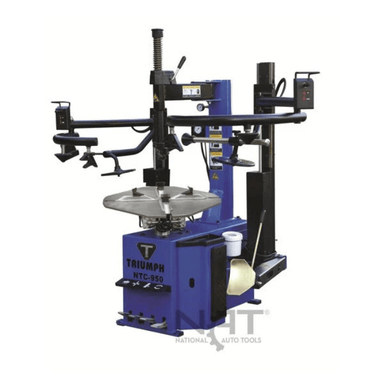
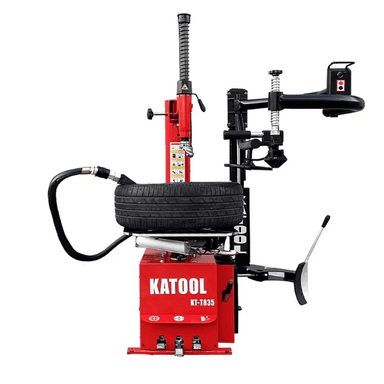
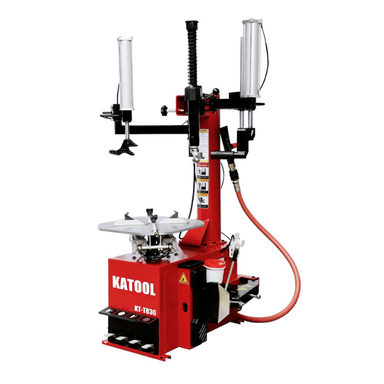
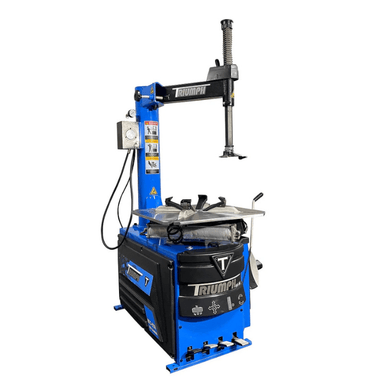
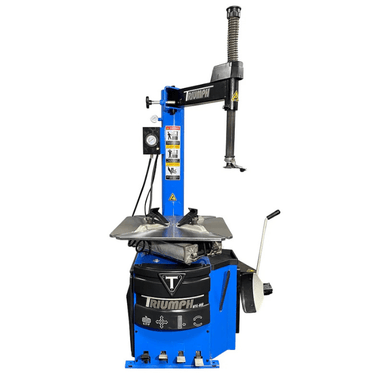
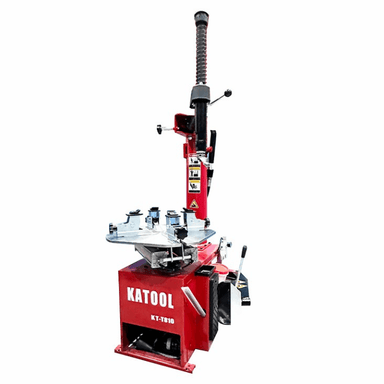
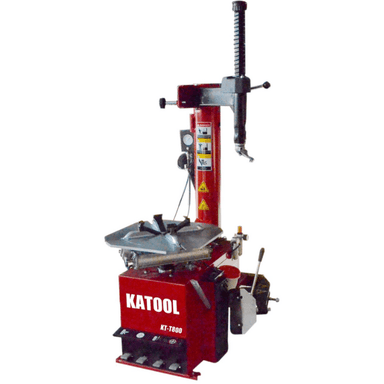
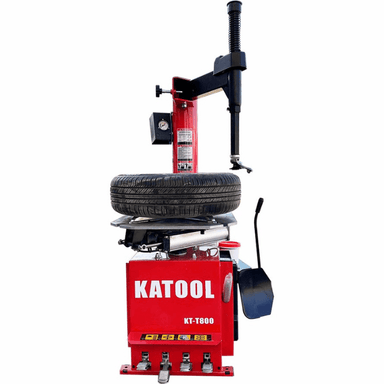
10-22 in rims, standard passenger tires: Any wheel-clamp tire changer (Katool KT-T800, T810, T830, T835 or Triumph NTC-950). Entry tier, $1,200-$2,200.

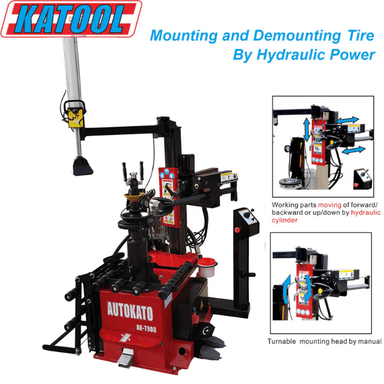
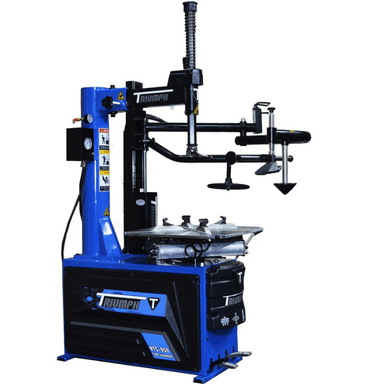
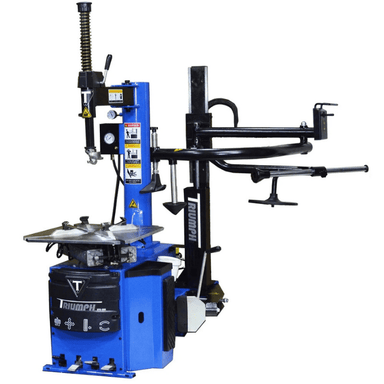
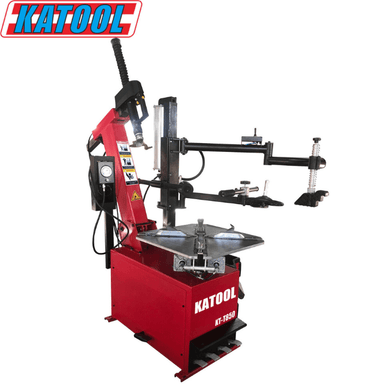
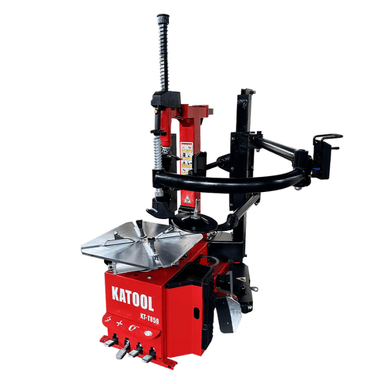
22-26 in rims, run-flats, low-profile, performance tires: Tilt-back or center-post tire changer with helper arm (Katool KT-T850, KT-T900 or Triumph NTC-950-1, NTC-950-2). Pro shop tier, $2,700-$4,700.

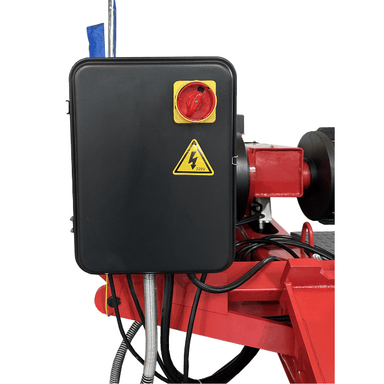
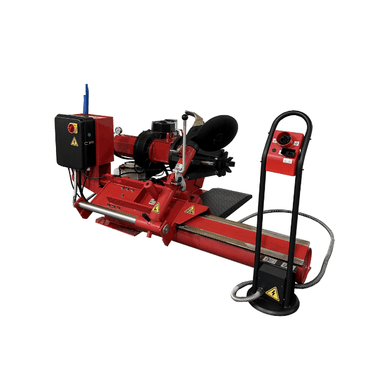
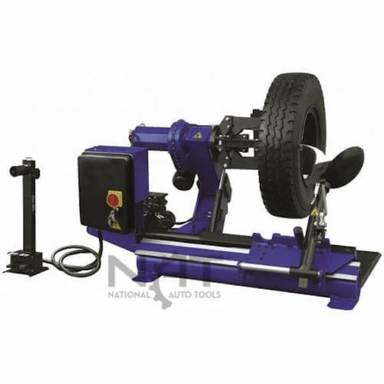
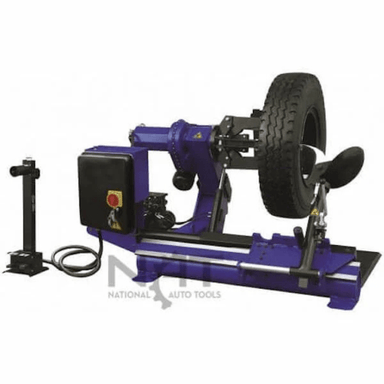
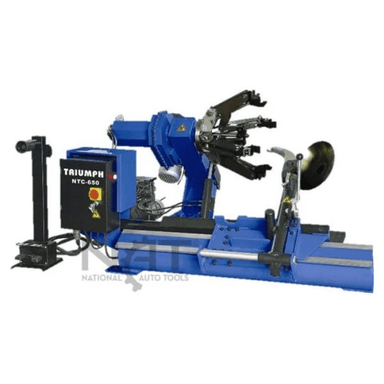
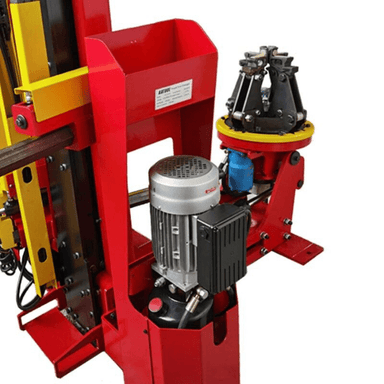
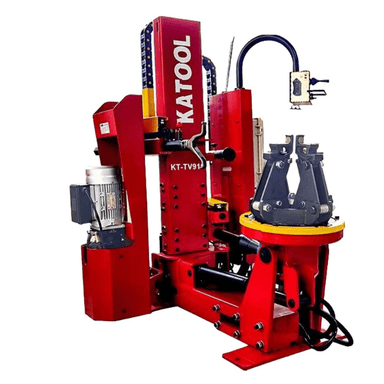
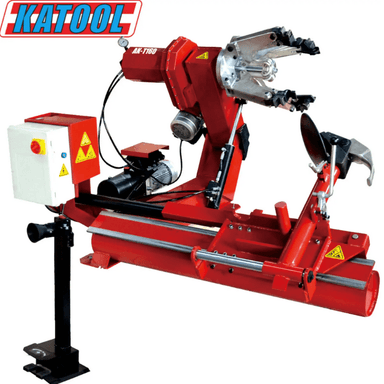
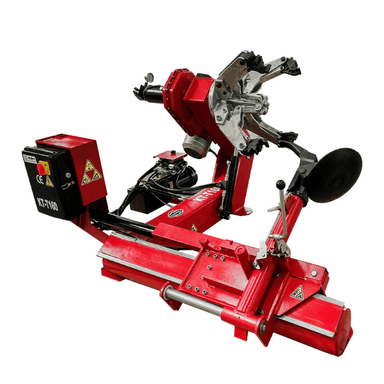
17.5-26 in commercial truck/bus tires: Heavy-duty truck tire changer (Katool KT-T160 or KT-TV910, Triumph NTC-650/NTC-690, or Tuxedo TC-770-T). Truck tier, $4,400-$9,600.

Buy for your hardest job, not your typical one. Customers don't tolerate scratched wheels from a too-small machine.

Swing-arm vs tilt-back tire changer: which is better?

Swing-arm tire changers have a vertical column with a horizontal arm that swings out of the way for wheel loading. Lower price, smaller footprint, fine for standard passenger tires. Entry tier.

Tilt-back tire changers tilt the entire mount column backward to clear large rims and accommodate run-flats. Self-centering mount head, standard helper-arm slot, faster cycle time. Premium price.

For general repair shops doing mostly OE tires: swing-arm. For tire shops handling run-flats and 20+ in performance wheels: tilt-back.

What's a helper arm and do I need one?

A helper arm is an auxiliary pneumatic arm with a roller or press that holds the tire bead down while the mount head rotates. On stiff-sidewall tires (run-flats, low-profile), the bead tends to pop back up during mounting — without a helper arm, you fight the tire and risk damaging the bead or pinching the tube.

For shops handling run-flat or low-profile tires regularly, a helper arm is not optional. For shops doing only standard tires, it's a nice-to-have but not critical.

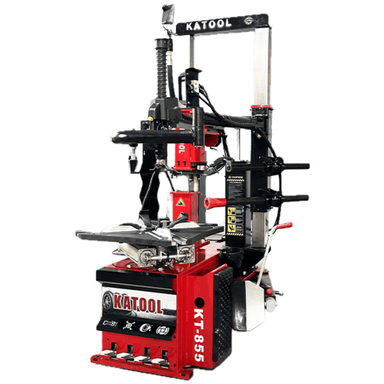
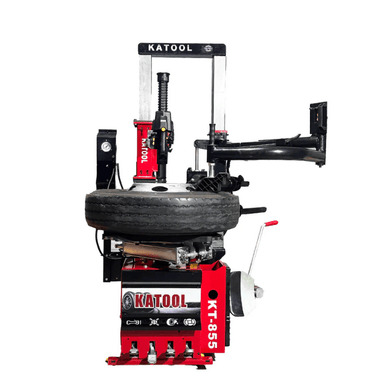
Tire changers in our catalog that include helper arms standard: Triumph NTC-950-1, NTC-950-2, Katool KT-T850, KT-T900, KT-855.

Can a standard tire changer handle run-flat tires?

Maybe, but slowly and with risk. Run-flat tires have stiff reinforced sidewalls designed to support the vehicle weight when deflated. That same stiffness makes them very hard to mount on a standard swing-arm changer without bead damage.

For occasional run-flat mounts: a standard machine with a manual press tool can work, but expect 5-10 minutes per wheel and the occasional scratched rim or damaged bead.

For regular run-flat work (BMW, Mercedes, performance tire shops): get a tire changer with a helper arm and tilt-back column. The Katool KT-T850, KT-T900, or Triumph NTC-950-1/NTC-950-2 are the right picks.

Do I need a wheel balancer too?

Yes, in 99% of cases. A tire changer mounts a new tire on a rim but doesn't balance the wheel assembly. After mounting, the wheel must be spin-balanced to remove vibration. Without balancing, customers feel steering wheel shake at highway speed and come back complaining.

Tire changer + wheel balancer is the standard pairing for any tire shop. We sell wheel balancers separately or bundled with tire changers in our Changer + Balancer Combos collection for bundle savings.

What electrical and air requirements does a tire changer have?

Standard car/light-truck tire changers run on 220V single-phase for the motor and require shop air at 110-150 PSI for the pneumatic bead breaker and bead seater. Most shops with a compressor already have the right air supply.

Heavy-duty truck tire changers may require 220V or 440V three-phase power for the larger hydraulic motor. Pneumatic requirements are similar.

Plan for a 1/2 in NPT air line at the tire changer location, plus a dedicated 220V outlet.

Will a car tire changer work on motorcycle tires?

Most car tire changers can mount motorcycle tires with an optional motorcycle adapter kit — clamps and a small turntable insert sized for narrower motorcycle wheels. Not ideal but works for occasional motorcycle work.

For shops with regular motorcycle tire volume, a dedicated motorcycle tire changer is faster and more accurate. iDEAL makes a TC-400M-B motorcycle tire changer (currently in our catalog but DRAFT) that's purpose-built for 2-wheel and ATV work.

How much shop floor space does a tire changer need?

Standard wheel-clamp tire changers have a footprint of roughly 4 ft x 4 ft with the arm extended. Tilt-back models add another 12-18 in for the tilted column. Heavy-duty truck tire changers are larger — roughly 6 ft x 6 ft.

Plan for 3-4 ft of working space around the machine on at least 3 sides. The operator needs room to load/unload wheels comfortably. Total bay area: roughly 10 ft x 12 ft for a car tire changer, 14 ft x 14 ft for truck.

Can I install a tire changer myself?

Yes. Tire changers ship mostly assembled — the operator only needs to bolt the column to the base, attach the mount arm, plug in power, and connect the air line. Plan 1-2 hours for setup with one helper.

Heavier truck tire changers (300+ lb) may need a forklift to position. Otherwise, it's straightforward DIY install. Most manufacturers include detailed install instructions; many post setup videos on YouTube.

Professional installation is typically $200-400 if you'd rather not DIY. Call (470) 208-2754 for install quotes.

How often does a tire changer need calibration or service?

Modern tire changers are mechanically robust and require minimal calibration. Recommended maintenance: weekly lube of pivot points and bead breaker arm; monthly inspect mount/dismount head for wear and replace plastic inserts as needed; annually change hydraulic fluid on hydraulic models.

Mount/dismount head plastic inserts ($20-50) wear out every 3,000-5,000 wheels and need replacing — keep a supply on hand. Beyond that, expect 10-15+ years of service life with minimal maintenance.

What's the difference between hydraulic and pneumatic tire changers?

Most car tire changers are pneumatic — they use shop air for the bead breaker, table rotation, and turntable lock. Air-powered changers are fast (1-2 seconds per operation) and cheaper to build. Standard for car/light-truck tire work.

Heavy-duty truck tire changers often use hydraulic power — internal hydraulic pump drives the turntable and bead-breaker arm with much more force than air can provide. Required for 19.5 in and larger commercial truck tires where the bead seal is too tight for pneumatic force.

For car work: pneumatic is the standard. For truck work: hydraulic is the standard.

How long is shipping on a tire changer?

Most in-stock tire changers ship within 2-5 business days from our Georgia warehouses or one of 42 pickup locations. Freight transit time depends on distance, usually 3-7 business days to the contiguous US. Total order-to-doorstep is typically 1-2 weeks.

Pickup at our warehouses is available if you want to grab a machine the same week.

What's the warranty on a tire changer?

Warranties vary by brand. Katool: 1-2 years parts on most tire changer models. Triumph: 1 year parts and labor on most NTC models. Tuxedo: 2-year structural and 1-year pneumatic on most TC models.

All warranties are direct from manufacturer. Pitstop Pro handles claims as the authorized dealer.