
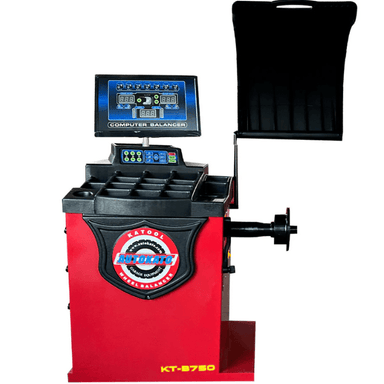
Upgrade Your Shop with the Katool KT-B750 Balancer – Fast, Accurate & Built for High-Demand Use If you're in the automotive industry or ...
View full detailsShop computerized wheel balancers and tire balancing machines from $1,049 entry to $3,375 commercial truck-capable. 7 wheel balancers across the Katool and Triumph lineups cover passenger cars, light truck, and commercial truck tires. Self-calibrating, automatic wheel-data entry, sub-gram accuracy. Free U.S. shipping included on every wheel balancer order.
Save $-1,490.00
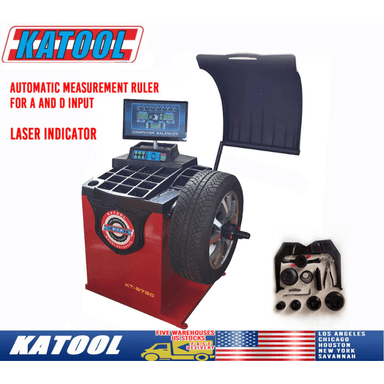
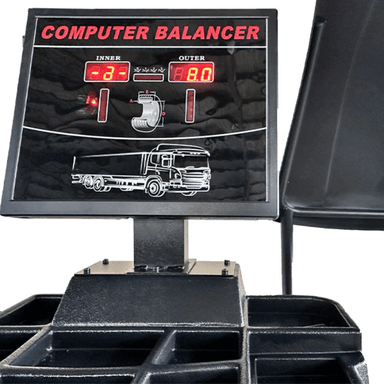
Upgrade Your Shop with the Katool KT-B750 Balancer – Fast, Accurate & Built for High-Demand Use If you're in the automotive industry or ...
View full details
Save $210.00
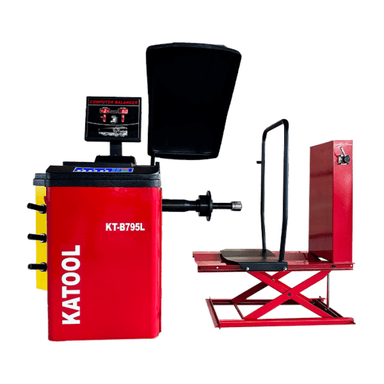
Tired of Slow Truck Tire Balancing? The Katool KT-B795L Truck & Car Balancer Handles Large Wheels with Ease The KT-B795L Truck Car Wheel...
View full details
Save $-1,199.00
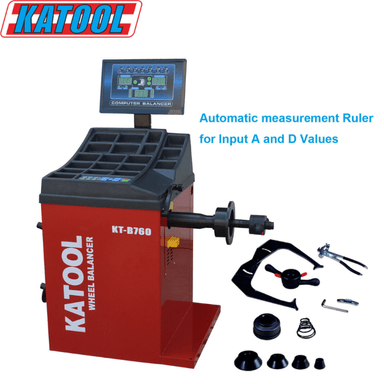
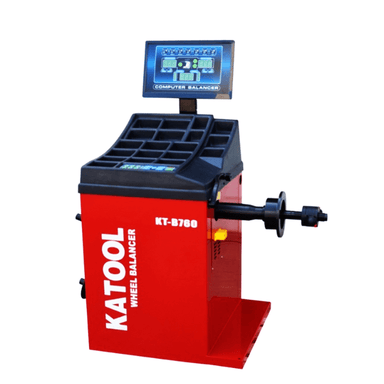
Advanced Features & Self-Calibration – The Katool KT-B760 Balancer Keeps Your Shop Running Smoothly The KT-B760 Wheel Balancer by Katool...
View full details
Save $350.00
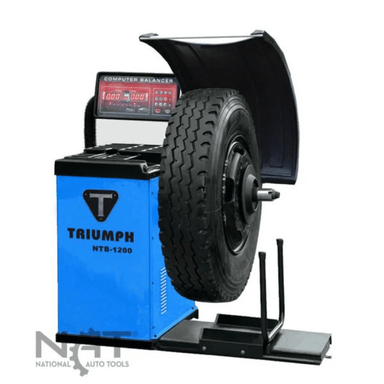
Truck to Sedan, One Machine Does It All – The NTB-1200 Wheel Balancer Delivers Consistent Accuracy Buying a wheel balancer can be a frustrat...
View full details
Save $250.00
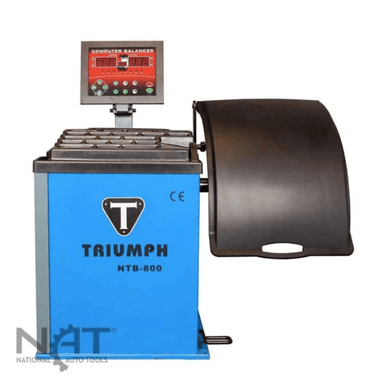
Say Goodbye to Manual Errors – The NTB-800 Wheel Balancer Auto-Detects Specs with a Touch When searching for the perfect wheel balancer for ...
View full details
Save $-1,650.00
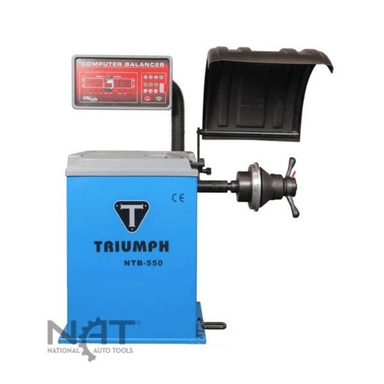
Tired of Rebalancing Jobs? The NTB-550 Is Built to Lock In Accuracy and Cut Down on Waste Are you tired of dealing with the hassle of inaccu...
View full details
Save $-1,049.00
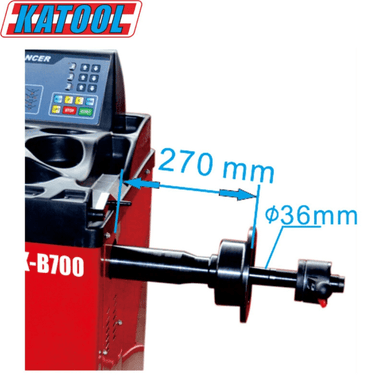
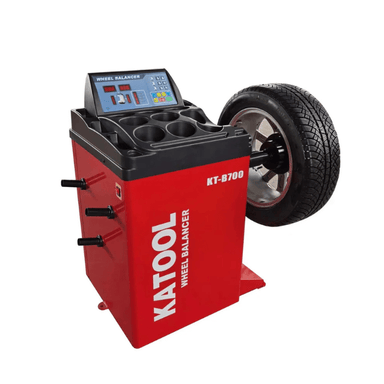
Say Goodbye to Uneven Rides – The Katool KT-B700 Balances Wheels with ±1g Accuracy The KT-B700 Wheel Balancer by Katool is the ultimate solu...
View full detailsA wheel balancer (also called a tire balancing machine) spins a mounted wheel-and-tire assembly at high RPM, measures the static and dynamic imbalance, and tells the operator exactly where and how much wheel weight to apply on the inner and outer rim flanges. The Pitstop Pro lineup covers 7 computerized wheel balancers from $1,049 entry to $3,375 commercial truck-capable, across the Katool and Triumph brands. All units self-calibrate, auto-detect wheel data, and balance to sub-gram accuracy.
Wheel balancers pair with tire changers and wheel alignment machines to form the core tire-shop equipment stack. A correctly balanced wheel eliminates the highway-speed steering-wheel shake that drives customers back to the shop for warranty rebalances, protects suspension components from premature wear, and extends tire life by 10 to 30 percent. Free U.S. shipping included on every wheel balancer order.
Not sure which balancer fits your shop volume and vehicle mix? Call (470) 208-2754 and our team will recommend the right model based on daily wheel volume and whether you service passenger, light truck, or commercial truck tires.
Browsing wheel balancers. See also tire changers, wheel alignment machines, nitrogen generators, and all auto shop equipment.
Four things that separate a pro-grade computerized balancer from a static bubble balancer.
Static bubble balancers only measure imbalance in one plane. Dynamic balancers spin the assembly at high RPM and measure imbalance on both the inner and outer rim flanges. Required for any wheel wider than roughly 5 inches.
Computerized balancers resolve to under 1 gram of imbalance. The operator sees exactly where to apply each weight (clip-on or adhesive) on the inner and outer rim. No guesswork, no come-back rebalance calls.
Pro balancers complete a full spin-measure cycle in 8 to 12 seconds. A trained operator balances a passenger car (4 wheels) in 6 to 10 minutes. High-volume tire shops run 40 to 60 balance jobs per day on one machine.
Tire balance typically sells at $15 to $25 per wheel, or $50 to $100 per car. With a $2,000 balancer and 20 wheels balanced per day, the equipment pays back in roughly 5 to 7 weeks.
Three tiers cover every shop scenario. Pick by daily wheel volume and whether you service passenger cars only or include commercial truck tires.
Independent shops, small dealership service lanes, mobile tire trucks. 3 Katool computerized balancers cover passenger car and light truck wheels up to 19-20 inch rim diameter.
Shop EntryDedicated tire shops, full-service dealership service bays, high-volume independent shops. Triumph NTB-550 and NTB-800 with faster cycles, larger displays, expanded wheel-data libraries.
Shop ProCommercial tire shops, fleet maintenance facilities, dealerships that service heavy trucks. Katool KT-B795L and Triumph NTB-1200 handle commercial truck and bus wheel assemblies.
Shop TruckMost balancer shoppers get hung up on the same two trade-offs. Here is how to think through each one.
Entry balancers handle passenger car and light truck wheels up to roughly 19 to 20 inch rim diameter and 65 to 75 lb wheel weight. That covers 95% of consumer vehicles on the road today.
If your shop services 22 to 24 inch oversized wheels (lifted trucks, larger SUVs), step up to a pro-tier balancer with wider shaft and higher motor torque. If you do commercial truck or bus wheels, you need the truck-capable models with extended shaft length, larger center adapters, and higher weight capacity (150+ lb).
Older balancers require the operator to manually enter wheel diameter, width, and offset using calipers and a measuring arm. Slower and more error-prone.
Modern computerized balancers (the entire Pitstop Pro lineup) use an automatic measuring arm or sonar that touches the wheel rim and auto-enters all three dimensions in 2 seconds. Faster, more accurate, fewer operator-error come-back calls. Worth the upgrade on any shop doing more than 5 balance jobs per day.
Tire balance typically sells at $15 to $25 per wheel at retail, or $50 to $100 per 4-wheel car. A modest 20 wheels per day at $20 per wheel is $400 per day, or roughly $104,000 per year in balance revenue. That pays back a $1,490 Katool KT-B750 in roughly 4 days of operating revenue, a $2,050 Triumph NTB-800 in roughly 6 days, and a $3,375 Triumph NTB-1200 commercial truck balancer in roughly 9 days. After payback, balance work is one of the highest-margin recurring revenue lines a tire shop can run.
Read related buying guides and the broader tire-shop equipment ecosystem.
The full Pitstop Pro tire balancing machine catalog organized by tier.
The Pitstop Pro entry point into computerized wheel balancing. Passenger-car focused with automatic data-entry arm, dynamic balancing, and sub-gram accuracy. Best pick for independent shops adding wheel balance as a service line.
Step up from the KT-B700. Larger display, expanded wheel-data library, faster spin-measure cycle. Solid value pick for shops doing 10 to 20 balance jobs per day on passenger and light-truck wheels.
Top of the Katool entry tier. Wider rim-diameter range covers up to 20 inch wheels, larger color display, expanded automatic data arm. The best Katool pick for shops that want pro-grade features without crossing into Triumph pricing.
The Triumph entry into the pro tier. Larger LCD display, faster cycle, more accurate auto-data arm than the Katool entry models. Best pick for shops moving up from light-duty Katool gear into dedicated tire-shop volume.
Pro shop volume pick. Faster cycle time, larger color display, expanded balance modes for stick-on weights and split-weight programs. The everyday workhorse for dedicated tire shops doing 40+ balance jobs per day.
Dual-purpose balancer that handles passenger car AND light commercial truck wheels. Extended shaft length, larger center adapters, higher weight capacity. The best pick for shops that occasionally service truck and trailer wheels alongside their passenger volume.
The flagship commercial truck balancer. Full-size electronic display, fully-automatic data entry, dedicated truck programs. Handles commercial truck, bus, and heavy trailer wheels up to 150+ lb. The pick for dedicated truck-tire shops and fleet maintenance facilities.
Wheel balancers pair with tire changers and wheel alignment machines to form a full tire-shop service bay. Browse the related categories.
Pro tire-mount machines for passenger, light truck, and large-wheel applications.
3D imaging and CCD alignment systems for full tire-and-alignment service bays.
PSA nitrogen tire inflation systems for shops, tire centers, and fleet conversions.
Scissor and 4-post alignment lifts that pair with wheel alignment machines.
The most common questions our shop equipment specialists get about wheel balancers and tire balancing machines.
A wheel balancer (also called a tire balancing machine) is a piece of shop equipment that measures imbalance in a mounted wheel-and-tire assembly. The operator mounts the assembly on the balancer shaft, enters the wheel dimensions (or lets the automatic measuring arm do it), and the machine spins the wheel at high RPM.
Sensors detect static imbalance (one side heavier) and dynamic imbalance (different planes heavier). The display shows the operator exactly where to apply each wheel weight (clip-on or adhesive) on the inner and outer rim flanges. A balanced wheel eliminates highway-speed steering-wheel shake, protects suspension components, and extends tire life.
Match the balancer to your daily volume and vehicle mix:
Under 20 wheels per day, passenger car only: Katool KT-B700 ($1,049), KT-B760 ($1,199), or KT-B750 ($1,490). Entry-tier computerized balancing.
Dedicated tire shop, 40+ wheels per day: Triumph NTB-550 ($1,650) or NTB-800 ($2,050). Pro-tier cycle speed and accuracy.
Shop with mixed passenger and light-truck work: Katool KT-B795L ($2,290). Dual-purpose for car and light commercial truck wheels.
Commercial truck tire shop or fleet: Triumph NTB-1200 ($3,375). Heavy-duty electronic truck balancer.
Call (470) 208-2754 for a specific recommendation based on your shop type.
Nothing. The terms are interchangeable. Some manufacturers and shops use "wheel balancer" while others use "tire balancing machine." Both refer to the same piece of equipment: a machine that spins a mounted wheel-and-tire assembly and measures imbalance.
Internet search volume slightly favors "tire balancing machine" (6,600 monthly searches in the US) over "wheel balancer" (3,600 monthly searches), but professional shop equipment is universally marketed as wheel balancers.
Static balancing measures imbalance in one plane only. Old-school bubble balancers (the plastic disc with a bubble level) only do static. Good for narrow motorcycle and trailer tires under roughly 5 inches wide.
Dynamic balancing spins the assembly at high RPM and measures imbalance on both the inner and outer rim flanges. Required for any modern passenger car or truck wheel (wider than 5 inches). The entire Pitstop Pro wheel balancer lineup is computerized dynamic balancing.
Modern computerized balancers can run in either mode but default to dynamic.
A single spin-measure cycle on a computerized balancer takes 8 to 12 seconds. The full job (mount the wheel on the shaft, enter data with automatic arm, spin, read display, apply weights, verify spin) takes 90 seconds to 3 minutes per wheel for a trained operator.
A passenger car (4 wheels) typically takes 6 to 10 minutes total. High-volume tire shops with practiced operators hit 4 to 6 minutes per car. Truck wheels take longer due to size and weight: roughly 5 to 8 minutes per truck wheel.
Pitstop Pro carries 7 wheel balancers spanning the price range:
Entry ($1,049 to $1,490): Katool KT-B700, KT-B760, KT-B750. Passenger car focus.
Pro Shop ($1,650 to $2,050): Triumph NTB-550, NTB-800. Dedicated tire shops.
Truck-Capable ($2,290 to $3,375): Katool KT-B795L and Triumph NTB-1200. Commercial truck and fleet.
0% APR financing through Affirm and Klarna is available at checkout on most wheel balancers.
Entry-tier balancers (Katool KT-B700, KT-B760) handle passenger car and light truck wheels up to roughly 19 to 20 inch rim diameter and 65 lb wheel weight. That covers 95% of consumer vehicles.
Pro-tier balancers (Katool KT-B750, Triumph NTB-550 and NTB-800) extend to 22 to 24 inch wheels and 75 to 100 lb weight. Useful for lifted trucks and oversized aftermarket wheels.
Truck-capable balancers (Katool KT-B795L, Triumph NTB-1200) handle 24 inch+ wheels and 150+ lb weight, with extended shaft and larger center adapters for commercial truck and trailer wheels.
Wheel balance typically sells at $15 to $25 per wheel at retail, or $50 to $100 per 4-wheel car. The cost-of-goods is just the wheel weights ($0.10 to $0.50 each) plus a minute of labor.
A modest 20 wheels per day at $20 per wheel is $400 per day, or roughly $104,000 per year in balance revenue. That pays back a $1,490 Katool KT-B750 in roughly 4 operating days, a $2,050 Triumph NTB-800 in roughly 6 days, and a $3,375 Triumph NTB-1200 commercial truck balancer in roughly 9 days. Balance work is one of the highest-margin recurring revenue lines in a tire shop.
Most wheel balancers run on standard 110V single-phase household power (NEMA 5-15 outlet). The motor that spins the wheel is electrically driven. No shop air is required.
Heavy-duty truck balancers (NTB-1200) may require 220V single-phase or 220V 3-phase depending on configuration. Specific electrical requirements are listed on each product page.
Most wheel balancers have a footprint of roughly 36 in wide by 48 in deep by 60 to 72 in tall. The operator needs roughly 4 to 5 ft of working space in front of the machine to mount and dismount wheels.
Truck wheel balancers (KT-B795L, NTB-1200) are larger, roughly 48 in wide by 60 in deep, and need 6 to 8 ft of working space because commercial wheels are heavier and require pneumatic lift carts or wheel handlers.
Most in-stock wheel balancers ship within 2-5 business days from our Georgia warehouses with free U.S. shipping included. Freight transit time depends on distance, usually 3-7 business days to the contiguous US. Total order-to-doorstep is typically 1-2 weeks.
Wheel balancers ship via freight (LTL) since they are larger than parcel-shippable. Tracking and delivery confirmation included on every order.
Routine maintenance is minimal:
Daily: Wipe down the shaft and adapter cones, check that the shaft turns freely. Weekly: Inspect the auto-data measuring arm for play or damage. Annually: Verify calibration using a calibration weight (most machines have a self-calibration routine). Every 2-3 years: Replace shaft bearings if cycle accuracy drifts.
Most pro-grade balancers have a 5-10 year operating life under normal shop conditions. Calibration verification once a year is the most important maintenance task.
Yes. Pitstop Pro offers 0% APR financing through Affirm and Klarna on most wheel balancer purchases. Approval is decided in seconds at checkout. Terms typically run 12-24 months with no prepayment penalty.
For commercial buyers, leasing is available through Crest Capital, useful if you would rather expense the equipment than capitalize it. See financing details or call (470) 208-2754 for a quote.