
Skip to content

A/C Recovery Machines

AC Recovery Machines & Refrigerant Recovery For Sale

AC Recovery Machines For Sale: R-134A, R-1234YF & Dual Gas

Shop AC recovery machines, refrigerant recovery machines, and automotive AC service machines for sale from 2 authorized brands: Katool and Bludee. Fully-automatic recovery, recycle, and recharge in one unit. R-134A models for older vehicles, R-1234YF models for 2017+ vehicles, and dual-gas models that handle both refrigerants on the same machine. EPA Section 609 compliant. 42 pickup locations nationwide.

42Pickup Locations
2 BRANDSKatool & Bludee
SAE J2788Compliant

Filters


About AC Recovery Machines

AC recovery machines for sale: refrigerant recovery, recycle, and recharge in one unit

An AC recovery machine (also called a refrigerant recovery machine or simply an AC machine) is the centerpiece equipment for any shop offering automotive air conditioning service. It safely captures used refrigerant from a vehicle's AC system, separates the oil, recycles the refrigerant to SAE J2788 purity standards, and recharges the system with the exact amount needed. The whole process is fully automated on modern machines — load the vehicle's refrigerant charge spec, hit start, and the machine does the rest in 30-45 minutes.

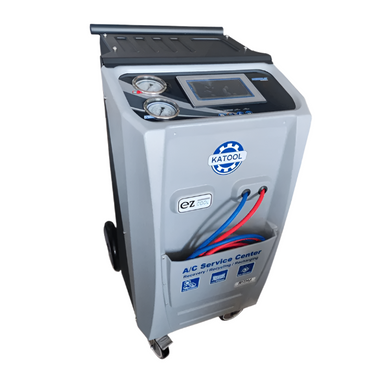
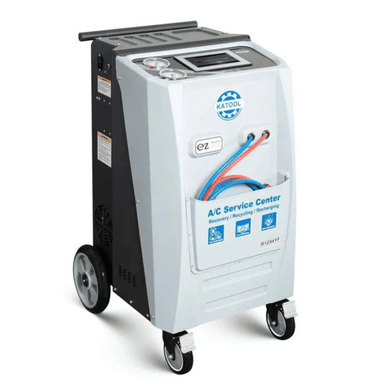
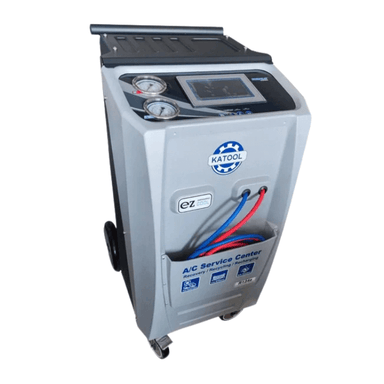
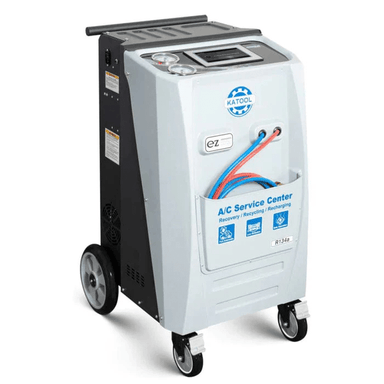
Pitstop Pro stocks 7 AC recovery machines for sale from 2 authorized brands: Katool (dual-gas KT-AC1800 R-134A and KT-AC2100 R-1234YF) and Bludee (AC400, AC400D, AC600, AC800, AC900 covering R-134A, R-1234YF, and dual-gas configurations). Capacities range from entry-tier $2,699 R-134A units up to premium $6,995 dual-gas machines with built-in refrigerant identifier. Every machine is EPA Section 609 compliant for legal automotive AC service.

Not sure if you need R-134A, R-1234YF, or a dual-gas machine? Call (470) 208-2754 for a recommendation based on the model years you typically service.

Browsing AC recovery machines. See also diagnostic scanners, tire changers, wheel alignment machines, and our full auto shop equipment catalog.

Hero image for the ac recovery machines collection

Why your shop needs a real AC recovery machine

Four reasons AC service is one of the highest-margin recurring revenue lines in any auto shop.

💰

$150-300 per AC service

Standard AC recovery, leak check, and recharge runs $150-300 retail. With an AC machine paying back $2,500-$6,000 total cost in 15-30 services, ROI is fast and demand returns every summer.

📜

EPA Section 609 compliance

Federal Clean Air Act requires shops servicing automotive AC to use EPA-certified recovery equipment. Every machine on this page meets EPA Section 609 and SAE J2788 standards. Required for legal AC service work.

Fully automatic operation

Load the vehicle refrigerant spec, hit start, walk away. Modern machines automatically recover, vacuum-test for leaks, weigh new refrigerant, and recharge to factory spec. 30-45 min per vehicle hands-off.

Recycles & reuses refrigerant

Built-in recycling filters and separates oil. Recovered refrigerant is purified to reusable standards. Reduces refrigerant purchasing costs and supports proper disposal (which is federally required).

R-134A vs R-1234YF: which refrigerant do you need?

The #1 AC machine decision. The two refrigerants don't interchange — using the wrong one damages the AC system and voids vehicle warranty.

134
R-134A

R-134A Refrigerant

  • Standard refrigerant for vehicles built 1994-2016.
  • Still the most common refrigerant on the road today.
  • Cheaper per pound ($8-15) than R-1234YF.
  • Lower-GWP than older R-12 but higher GWP than R-1234YF.
  • Larger AC machine selection at lower price points.
Best for: Shops servicing mostly pre-2017 vehicles, used-car lots, RV/marine AC service.
YF
R-1234YF

R-1234YF Refrigerant

  • Mandatory for all new vehicles since 2017 (EPA SNAP rule).
  • Lower global-warming-potential than R-134A — 99.7% lower.
  • More expensive per pound ($65-90).
  • Higher-precision machines required due to mild flammability.
  • Mandatory built-in refrigerant identifier on most machines.
Best for: Shops servicing 2017+ vehicles, dealerships, fleet shops with newer commercial vehicles.

Doing the research first?

Read related buying guides and explore the auto shop equipment ecosystem.

AC Recovery Machine FAQs

The most common questions our shop-equipment specialists get about AC recovery machines.

R-134A vs R-1234YF: which AC machine do I need?

R-134A is the standard refrigerant for vehicles built 1994-2016 and is still in most used vehicles on the road. Cheaper refrigerant per pound ($8-15), lower-cost AC machines ($2,699-$4,995). Best if you service mostly older or used-car inventory.

R-1234YF has been mandatory on all new vehicles since 2017 under the EPA SNAP rule. More expensive refrigerant per pound ($65-90), higher-precision machines required, optional built-in refrigerant identifier. Required for current model years and 2017+ vehicles.

For most independent shops servicing a mix of model years, a dual-gas machine (Katool KT-AC2100 or Bludee AC400D) is the smarter choice — handles both refrigerants on one unit, half the floor footprint.

Do I need EPA Section 609 certification to use one of these?

Yes if you're operating a commercial shop servicing automotive AC. The federal Clean Air Act Section 609 requires that anyone who services motor vehicle air conditioning systems (recovering, recycling, or recharging refrigerant) be EPA Section 609 certified.

Certification is a one-time $20-30 test from MACS (Mobile Air Conditioning Society) or several other approved organizations. Takes about 1-2 hours of study and a 25-question online test. Highly recommended for every tech on your AC service line.

Every AC machine in our catalog is EPA Section 609 compliant equipment. You still need the operator certification separately to legally use them on customer vehicles.

What's a built-in refrigerant identifier and do I need one?

A refrigerant identifier is a sensor that detects whether the refrigerant in a vehicle's AC system has been contaminated with a different gas type, sealant additive, or hydrocarbon blend before you connect your machine. Important because:

Why it matters: Contaminated refrigerant entering your AC machine ruins the recovery pump, compresses the refrigerant tank, and contaminates the next vehicle's system. Damage from contamination can run $500-2,000 in repairs.

Bludee AC400D, AC600, AC900 all offer optional built-in refrigerant identifier (+$500-1,000 over the base price). For shops servicing unknown-history used vehicles, the identifier pays for itself the first time it catches a contaminated system.

For shops servicing only known-history customer vehicles or new cars, a standalone refrigerant identifier (sold separately) works fine.

How long is a typical recovery and recharge cycle?

Modern fully-automatic AC machines complete the full recover-recycle-vacuum-recharge cycle in 30-45 minutes with no operator intervention beyond loading the vehicle's refrigerant charge spec. Breakdown:

Recovery (5-15 min): Drains refrigerant from the vehicle into the machine's internal tank. Recycle (3-5 min): Filters and separates the recovered refrigerant from oil and moisture. Vacuum (15-25 min): Pulls a vacuum on the empty AC system to test for leaks. Recharge (2-5 min): Injects the exact specified charge of refrigerant and oil.

Premium machines (Bludee AC800, AC900, AC400D) have faster cycle times — usually 25-35 minutes total. The difference compounds over a busy summer when you might do 10-15 AC services per week.

How much does an AC service cost to perform with one of these?

Cost per service breaks down to: refrigerant ($8-15/lb for R-134A, $65-90/lb for R-1234YF — typical 2-3 lb charge), oil ($3-5), filters on the machine ($0.50-1 per service amortized), and tech labor ($30-60). Total cost: ~$45-70 for R-134A service, ~$160-220 for R-1234YF service.

Retail pricing: $150-250 for R-134A AC service, $350-500 for R-1234YF service. Gross margin per service is $80-280. With an AC machine paying back in 15-30 services and demand returning every summer, ROI is fast.

What electrical and air requirements does an AC machine have?

All AC recovery machines in our catalog run on standard 110V single-phase household power (NEMA 5-15 outlet — same as a normal wall outlet). No 220V or 3-phase required.

No shop air required for AC machines — the recovery pump is built into the machine and electrically driven. (You may want shop air for related AC repair work like blowing out condensers, but the recovery machine itself doesn't need it.)

How much shop floor space does an AC machine take?

Most AC recovery machines have a footprint of roughly 24 in wide x 30 in deep x 48 in tall with wheels for shop-floor mobility. Roughly the size of a tall narrow rolling tool cabinet. Plan for 3-4 ft of working space on at least 2 sides to roll the machine in and out and connect hoses to the vehicle.

Dual-gas machines are roughly the same footprint as single-gas units — the second refrigerant circuit is internal. Big advantage for shops with limited floor space.

Robinair vs Katool vs Bludee: which brand is best?

Robinair is the long-time premium-tier AC machine brand, sold mostly through dealership equipment distributors at $4,000-$10,000+ price points. Industry standard for dealership AC service.

Katool AC machines are mid-price entry-tier ($2,699). Solid feature set, dual-gas capability, fully automatic operation. Best for independent shops adding AC service as a revenue line.

Bludee AC machines are premium-tier mid-price ($3,995-$6,995). 7-inch touchscreen interfaces, optional built-in refrigerant identifier, faster cycle times. Best for high-volume independent shops and small dealerships.

For new AC service offerings on a budget: Katool. For established shops with regular AC volume: Bludee. Pitstop Pro does not currently sell Robinair AC machines.

What maintenance does an AC machine need?

Routine maintenance is minimal. Most machines need:

Annually: Replace the filter-drier element ($30-60), change vacuum pump oil ($10-15), inspect hoses for cracking. Every 100 services: Verify scale calibration with a known refrigerant weight. Every 500-1,000 services: Replace internal recovery pump seals if pressure-test indicates wear ($150-300 service).

SAE J2788 certification recommends an annual calibration verification by an authorized service technician. Most AC machine manufacturers offer this through dealer networks.

What's the difference between recovery, recycle, and recharge?

Recovery: Removing refrigerant from a vehicle's AC system into a holding tank. Required by EPA law before opening or servicing any AC system.

Recycle: Filtering the recovered refrigerant to remove oil, moisture, and contaminants. Brings recovered refrigerant back to SAE J2788 purity standard for reuse.

Recharge: Injecting the precise amount of clean refrigerant (and refrigerant oil) back into the AC system per the vehicle manufacturer's spec.

All AC machines in our catalog do all three operations in one fully-automatic cycle. Older machines required separate equipment for each step.

Can I use an R-134A machine on a R-1234YF vehicle?

No. The two refrigerants don't interchange. R-1234YF uses different fittings, different oil, and different system pressures than R-134A. Connecting an R-134A machine to an R-1234YF system damages both the vehicle AC and your machine — internal mixing of the two refrigerants is a chemistry problem.

If you service 2017+ vehicles, you need either an R-1234YF dedicated machine OR a dual-gas machine. Trying to use an R-134A machine on a YF vehicle (or vice versa) voids vehicle warranty and ruins the equipment.

How long is shipping on an AC machine?

Most in-stock AC recovery machines ship within 2-5 business days from our Georgia warehouses or one of 42 pickup locations. Freight transit time depends on distance, usually 3-7 business days to the contiguous US. Total order-to-doorstep is typically 1-2 weeks.

Pickup at our warehouses is available if you want to grab a machine the same week.

What's the warranty on an AC recovery machine?

Warranties vary by brand. Katool: 1-year parts on most AC machine components. Bludee: 2 years parts and labor on most AC400/600/800/900 series machines, including the touchscreen and refrigerant scale.

All warranties are direct from manufacturer. Pitstop Pro handles claims as the authorized dealer.